Focused arrival windows
Useful updates and clear arrival timing.
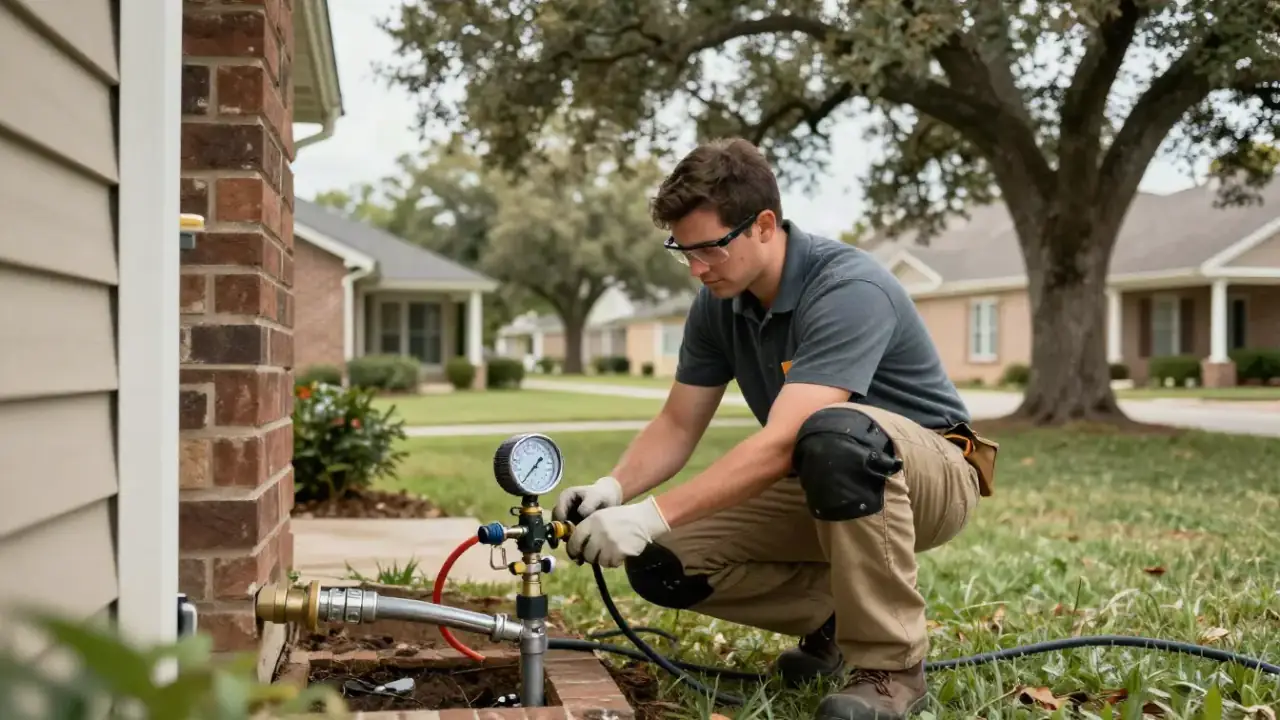
Water Meter Leak Diagnosis Spring TX is how you catch a hidden leak before it soaks your foundation or doubles your bill. If your meter spins with every fixture off, you have a leak somewhere between the meter and the house. We run water meter leak detection in Spring for homeowners across Harris County, pinpoint the break with acoustic and thermal gear, and repair it the same day in most cases.
Useful updates and clear arrival timing.
Review the approach and price before deciding.
Equipped vehicles and respectful cleanup.
Neighbors serving neighbors with follow-through.
Every diagnosis covers the full meter-to-fixture check. Repair work is quoted separately once we know what failed, so you are never paying for excavation you do not need.
We shut every fixture, irrigation zone, and pool fill, then watch the low-flow indicator for two full minutes. This single step confirms whether the leak is on your side of the meter or the city's.
We walk the property with Sewerin and Gutermann listening equipment to catch the hiss of pressurized water escaping a pipe. This works through slab, soil, and tile without breaking anything open.
A Fluke thermal imaging camera reveals temperature shadows where water is pooling under the slab or behind a wall. We use it to narrow the search area before we mark anything.
A pipe locator traces the buried run so we know exactly where the line sits relative to your foundation, driveway, and trees. That mapping keeps the repair access as small as possible.
You get the marked location, a photo of the meter reading, and a plain-English explanation of what failed. If you want a second opinion, you have the data to get one.
Share what is happening and receive a clear next step from the local team.
Water Meter Leak Diagnosis Spring TX is the process of isolating a leak by reading your meter against a controlled water system. We shut every fixture, confirm the low-flow indicator has stopped, then watch the dial. If it creeps, water is escaping somewhere on your side of the meter. From there we use acoustic listening discs, a pressure testing kit, and a thermal imaging camera to narrow the break to a slab, a service line, or an irrigation zone before we dig anything.
Spring sits on expansive clay soil that swells after every heavy rain and shrinks hard in a dry summer. That cycle cracks copper pipe and shears PVC at fittings, which is why we see so many underground pipe leaks in older neighborhoods off FM 2920 and near Old Town Spring. If you have a water meter spinning but no water running Spring TX, that is the classic signature. We confirm it with a water meter leak test Spring and give you a straight answer on where the water is going.
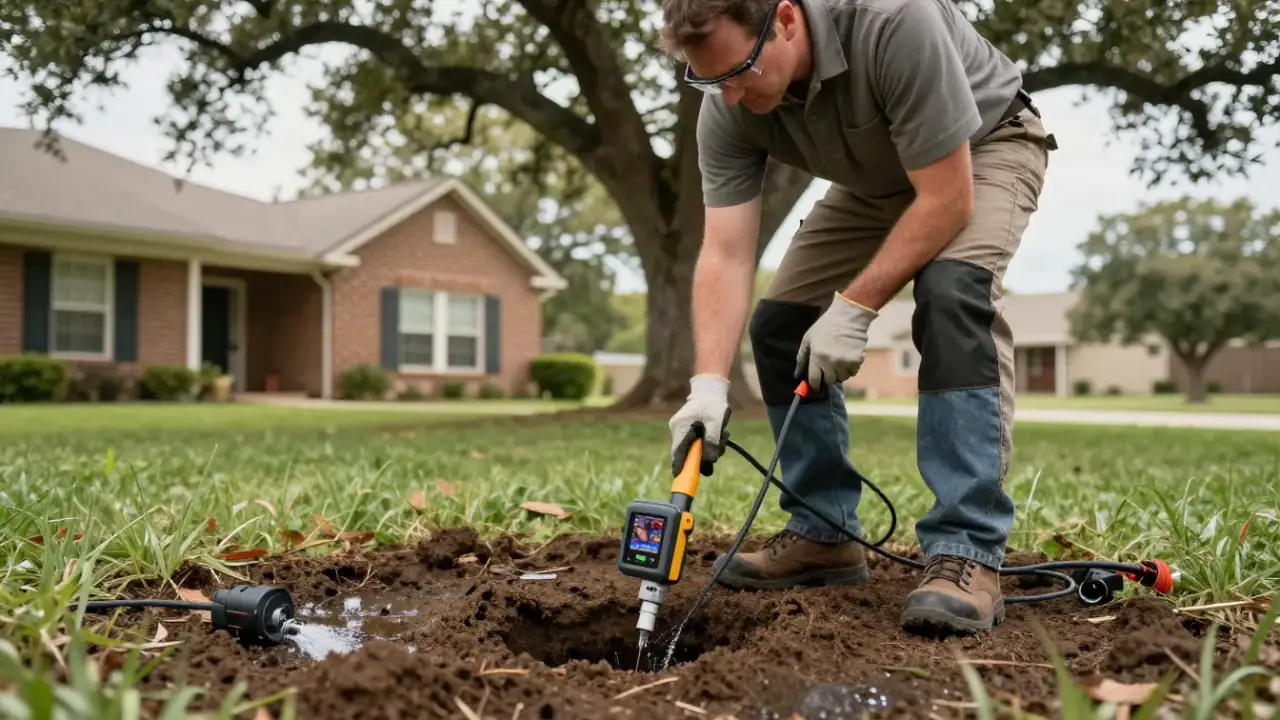
You call (281) 248-8538 and describe what you are seeing: a spinning meter, a wet patch, a jump in the bill. We ask three or four questions, give you a ballpark, and book a window. Most Spring calls get a same-day slot, and we run 24/7 for active flooding.
On arrival we shut off every fixture, irrigation zone, and pool fill line, then watch the meter's low-flow triangle for a full two minutes. If it moves, the leak is confirmed on your side. This step takes about 15 minutes and costs you nothing extra.
We walk the property with acoustic leak detection equipment and a thermal imaging camera, listening for the hiss of pressurized water and looking for temperature shadows under the slab. A pipe locator maps the run so we know where to focus. This is the 60 to 90 minute core of the job.
We mark the break on the ground with paint and confirm it with a moisture meter and, on service lines, a video pipe inspection camera. You get a written location, a photo of the meter reading, and a clear explanation of what failed and why.
If it is a fitting, a clamp, or a short run of PEX tubing, we repair it on the spot and pressure-test before we leave. If it is under the slab, we hand you the pinpoint and a trenchless repair plan. Either way you are not guessing about the next step.
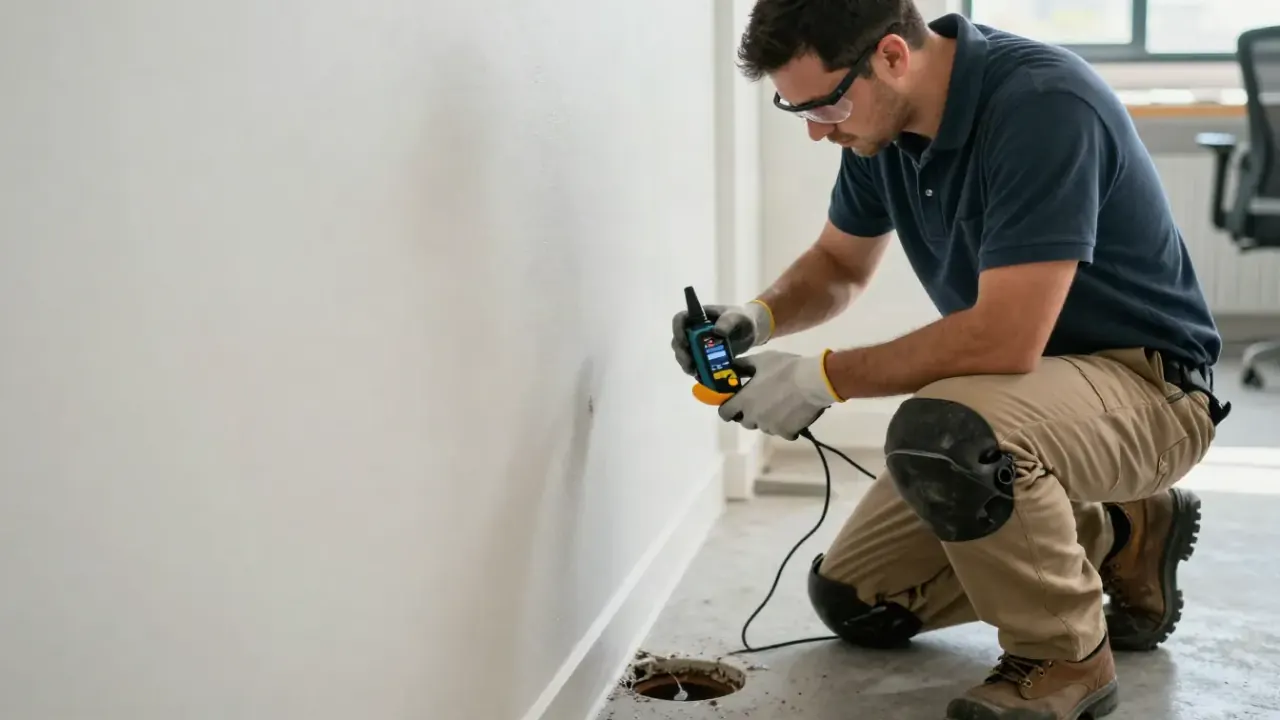
Ground microphones and listening discs that catch the frequency of pressurized water escaping a pipe, even through slab and soil.
Reveals temperature shadows where water is pooling under a slab or behind a wall, narrowing the search area before we mark.
Correlation gear that compares sound at two points on the line to triangulate the leak to within a few inches.
Isolates the service line and holds it at 80 psi to confirm whether the break is on the supply side or the drain side.
Runs inside the line to show cracked copper, failed fittings, or root intrusion that acoustic gear can only hint at.
Confirms elevated moisture in drywall, subfloor, and framing so we can trace a hidden leak back to its source.
Maps buried runs so we know exactly where the line sits relative to the foundation, driveway, and trees.
We shut every fixture, irrigation zone, and pool fill, then watch the low-flow indicator for two full minutes. If it moves, the leak is confirmed on your side of the meter. This is the fastest way to separate a real leak from a faulty meter.
Two sensors placed on the line compare the sound of escaping water and calculate the leak point by difference in arrival time. It works through slab and soil and gets us within inches on a service line.
We scan the floor and walls with a thermal imaging camera looking for the temperature signature of wet material. Hot spots under a slab usually mean a hot-water line break; cold spots point to cold supply or irrigation.
We valve off sections of the system and pressure-test each one to 80 psi. Whichever section will not hold is the one with the leak, which keeps us from opening the wrong part of the floor.
Every repair we make follows the International Plumbing Code, and where the jurisdiction requires it, the Uniform Plumbing Code. We pressure-test and hold before backfill so the fix passes inspection the first time.
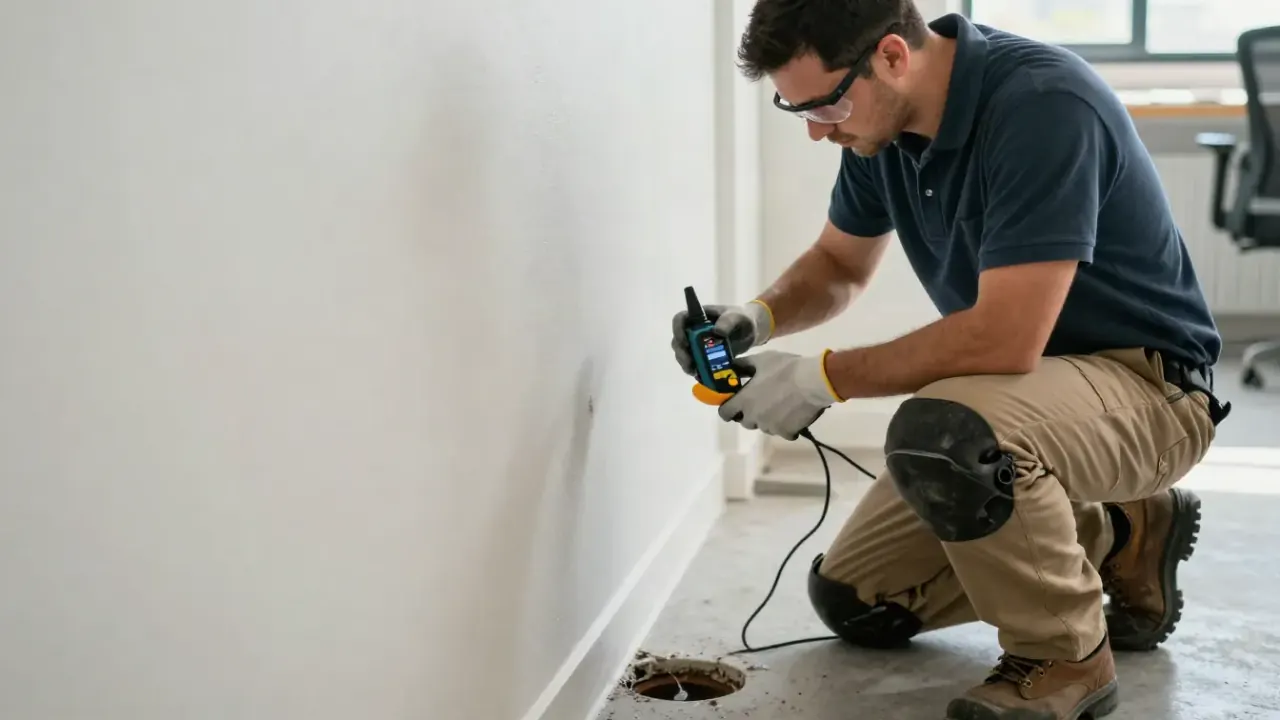
We run a full meter isolation test, then sweep the service line, slab, and irrigation zones with acoustic and thermal gear. We document the meter readings so you have proof of what changed. You get a confirmed leak location and a repair quote, plus the data to dispute an overcharge with your water utility.
We perform a pre-purchase water meter diagnosis Spring, Texas check that covers the meter, service line, and visible plumbing. You get a written report before you close. You know whether you are inheriting a $200 fix or a $6,000 slab repair, which changes your negotiation position.
That is the classic hidden leak. We isolate every zone, then use acoustic listening and a video pipe inspection camera to trace the break through soil or slab without digging blind. We mark the exact spot on the ground and explain what failed, so the repair crew opens a small access point instead of your whole floor.
We run after-hours diagnosis to avoid disrupting the tenant, isolate the leak, and document everything for the owner and insurer. The leak is located and repaired, the meter stops spinning, and you have a paper trail for the claim.
Spring sits on some of the most active clay soil in Harris County. It swells after a heavy rain and shrinks hard in a dry summer, and that cycle works on buried pipe like a slow wrench. Copper pipe work-hardens and cracks at fittings; PVC pipe shears at the joint. That is why we see so many underground pipe leaks in older neighborhoods near Old Town Spring and along FM 2920, and why a water meter diagnosis Spring, Texas callout in August often finds a different failure than the same call in February. We also deal with high water tables after a storm, which pushes water against service lines and makes a small break look like a big one. If you have a water meter spinning but no water running Spring TX, we start with the meter isolation test, then sweep with acoustic and thermal gear. We know the local building stock, the soil, and the code requirements, and we pressure-test every repair to 80 psi before we backfill.
Older homes with original copper service lines that work-harden and crack at fittings after decades of clay soil movement.
Large lots with long irrigation runs, where a stuck zone valve can spin the meter all night and look like a slab leak.
Mature trees with aggressive roots that find their way into PVC service lines and open small leaks into big ones.
Newer construction with PEX tubing, where we more often find a failed crimp ring or a pressure issue than a pipe break.
Homes built on fill dirt that settles unevenly, shifting the service line and stressing the connection at the meter.
The movement cracks copper and shears PVC at fittings, so we check the service line and slab connection first on any meter leak call in Spring.
Dry soil pulls away from the pipe and removes support, which lets the line flex and fail at joints. We see a spike in slab leak calls from July through September.
A saturated water table pushes against service lines and can mask a small leak as a large one, so we pressure-test to separate the two.
Copper that has been in the ground for decades is prone to pinhole leaks. We check the meter reading against a pressure test to confirm before recommending replacement.
A homeowner called us with a meter that would not stop spinning and a water bill that had jumped from $120 to $410 in one cycle. Two other plumbers had quoted a full slab excavation without running a meter test.
We isolated the meter, ran an acoustic sweep, and found the leak in the service line about 14 feet from the foundation, not under the slab. We repaired the fitting, pressure-tested to 80 psi, and the meter stopped dead. Bill dropped back to $118 the next cycle.
Maintenance: We recommended a seasonal meter check each spring and fall. Watching the low-flow triangle for two minutes is free and catches a new leak before it shows on the bill.
A Gleannloch Farms homeowner had a wet patch in the yard and a meter that spun at night. They were told it was a slab leak and were preparing for a $6,000 repair.
Our water meter leak test isolated each irrigation zone and found zone four would not hold pressure. A failed valve was dumping water underground all night. We replaced the valve for under $300 and the meter stopped spinning.
Maintenance: We showed the homeowner how to run each zone manually once a month and watch the meter. A stuck valve shows up immediately that way.
A Timberlane customer heard running water under the house but could not see anything from the crawl space access. The meter confirmed a leak, and the humidity under the floor was climbing.
We crawled the space with a moisture meter and acoustic gear, found a cracked CPVC pipe at a fitting, and repaired it with a coupling. The meter stopped, and we ran a dehumidifier for two days to dry the framing.
Maintenance: We suggested an annual crawl space inspection before summer. Catching a cracked fitting early keeps mold out of the framing and the floor joists dry.
Most meter leaks announce themselves the same way: a bill that climbs, a meter that will not sit still, and a floor or yard that stays wet. Here is what we fix.
Every hour it spins, you pay for water that is soaking into clay soil or under your slab, and the damage compounds quietly. We isolate the system, confirm the leak on the meter, and use acoustic and thermal gear to pinpoint the break. Most customers get a confirmed location in two to four hours and a repair plan the same day.
A pinhole leak can waste 6,000 gallons a month. Left alone for a season, that is hundreds of dollars and a foundation that starts to move. We run a full water meter leak detection Spring audit that checks the service line, slab, irrigation, and pool fill. You get the culprit in writing, not a guess, and we credit the diagnostic fee toward the repair.
A saturated patch near the foundation feeds root growth, softens soil, and often means a service line or irrigation break is dumping water underground. We pressure-test the service line and each irrigation zone, then use a pipe locator to map the run. Once we know which line failed, we repair it with copper, PEX tubing, or epoxy pipe lining depending on material and depth.
That hiss is pressurized water escaping a pipe, and it usually means a slab leak or an under-house leak that will warp flooring and invite mold. We listen with acoustic equipment, confirm with thermal imaging, and mark the break. If it is accessible, we repair it on the spot and pressure-test to 80 psi before we leave.
$180 - $450 for diagnosis; repairs quoted separately based on scope
Typical 2026 pricing for a residential water meter leak diagnosis in Spring runs $180 to $450. That covers the meter isolation test, the acoustic and thermal sweep, and a written pinpoint. If the leak turns out to be in a slab, a service line, or an irrigation zone, the repair is quoted separately once we know what failed. We credit the diagnostic fee toward the repair when you hire us for the fix, so the diagnosis effectively costs you nothing on a completed job.
A confirmed leak location saves you from paying for excavation you do not need. Customers routinely avoid $3,000 to $6,000 in unnecessary slab work because we proved the leak was somewhere else first.
An irrigation valve or an accessible service line fitting is quick to diagnose. A leak under a slab or deep in a yard takes longer to pinpoint and adds to the diagnostic time.
Homes with multiple irrigation zones, a pool fill line, and a large footprint take longer to isolate. Each zone has to be valved off and tested separately.
A clean crawl space or an open yard is fast. A finished floor, a tight pier-and-beam space, or a driveway that has to be scanned adds time and equipment to the job.
Copper, PEX tubing, PVC pipe, and CPVC pipe each fail differently and require different diagnostic approaches. Older copper systems often need a pressure test in addition to the acoustic sweep.
Emergency calls at 2 a.m. or on a holiday carry a higher rate. Standard weekday appointments get the lowest diagnostic price.
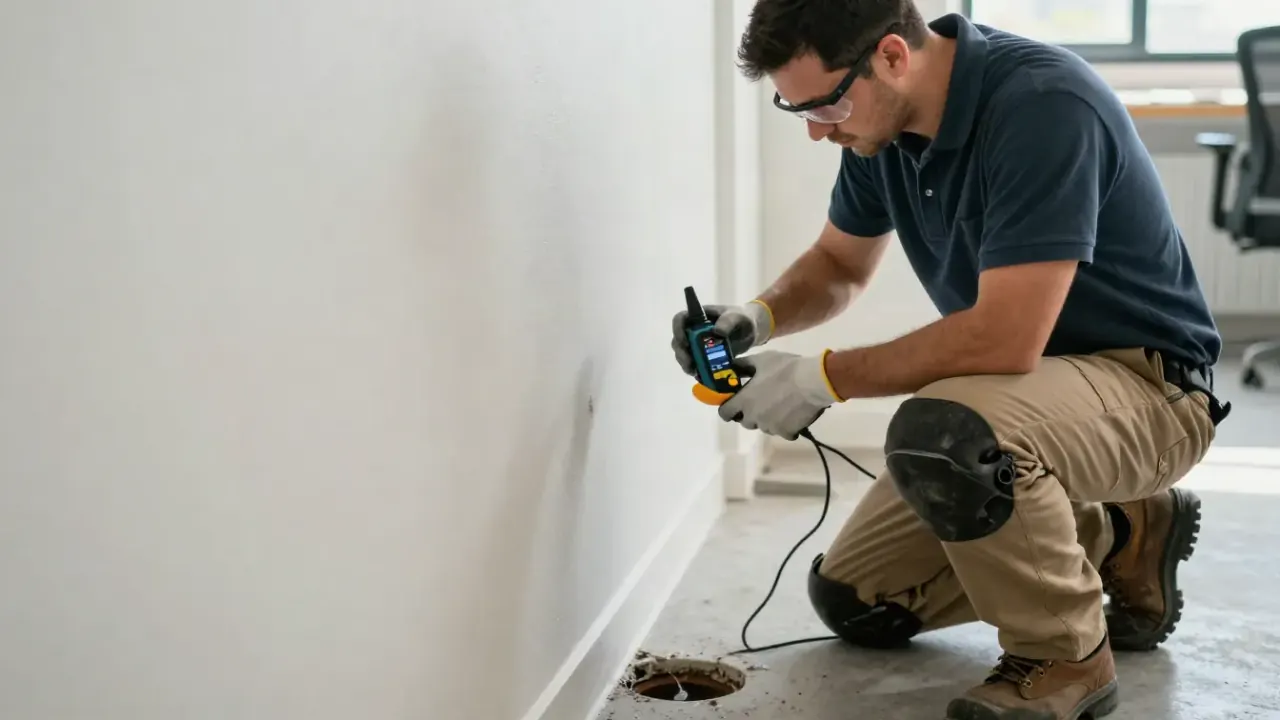
Our technicians hold Texas State Board of Plumbing Examiners licenses, and every lead tech carries a Master Plumber License or works directly under one. We have run meter diagnostics on slab leaks, water service line leaks, and irrigation breaks across Harris County for years, and we keep our calibration current on Sewerin and Gutermann acoustic gear. We also hold Backflow Prevention Assembly Tester certification, which matters when a leak sits near a supply connection. When we say we have seen your exact meter behavior before, we mean it.
Our bill went from $110 to $390 in one month and we could not figure out why. Spring Leak Detection ran the meter test, found a slab leak in about 90 minutes, and showed us the thermal image. They repaired it through a closet floor and we have not had a spike since. Straight shooters.
I called three plumbers and two wanted to jackhammer immediately. These guys did the water meter leak test first and proved the leak was in our irrigation valve, not the slab. Saved us thousands. The tech walked me through the meter reading so I could check it myself.
We manage 14 rental units and had a meter spinning at one of them. They came out same day, isolated the leak to a service line fitting, and had it repaired and pressure-tested by dinner. Clean work, clear invoice, no upsell. They are our first call now.
Shut off every faucet, appliance, and irrigation zone, then watch the low-flow triangle on your meter for two minutes. If it moves, you have a leak. The other tell is a bill that jumps more than 20 percent with no change in habits. We confirm it with a water meter leak test Spring and pinpoint the source the same day.
Most residential diagnoses run $180 to $450 in 2026, depending on whether we are checking a slab, a service line, or an irrigation system. That covers the meter isolation test, the acoustic and thermal sweep, and a written pinpoint. If you hire us for the repair, we credit the diagnostic fee toward the work.
A spinning meter with everything off means pressurized water is escaping somewhere past the meter. The usual suspects are a slab leak, a failed service line fitting, or a stuck irrigation valve. Clay soil movement in Harris County cracks copper and shears PVC, so we start with an acoustic sweep and narrow it from there.
You want a licensed leak detection specialist, not a general handyman. Our technicians hold Texas State Board of Plumbing Examiners licenses and use Sewerin and Gutermann acoustic gear to confirm the break. Call (281) 248-8538 and we will tell you on the phone whether your symptoms point to a meter-side leak.
Not seeing your question? Our local team can help you understand urgency, scheduling and what to expect.
Ask the local team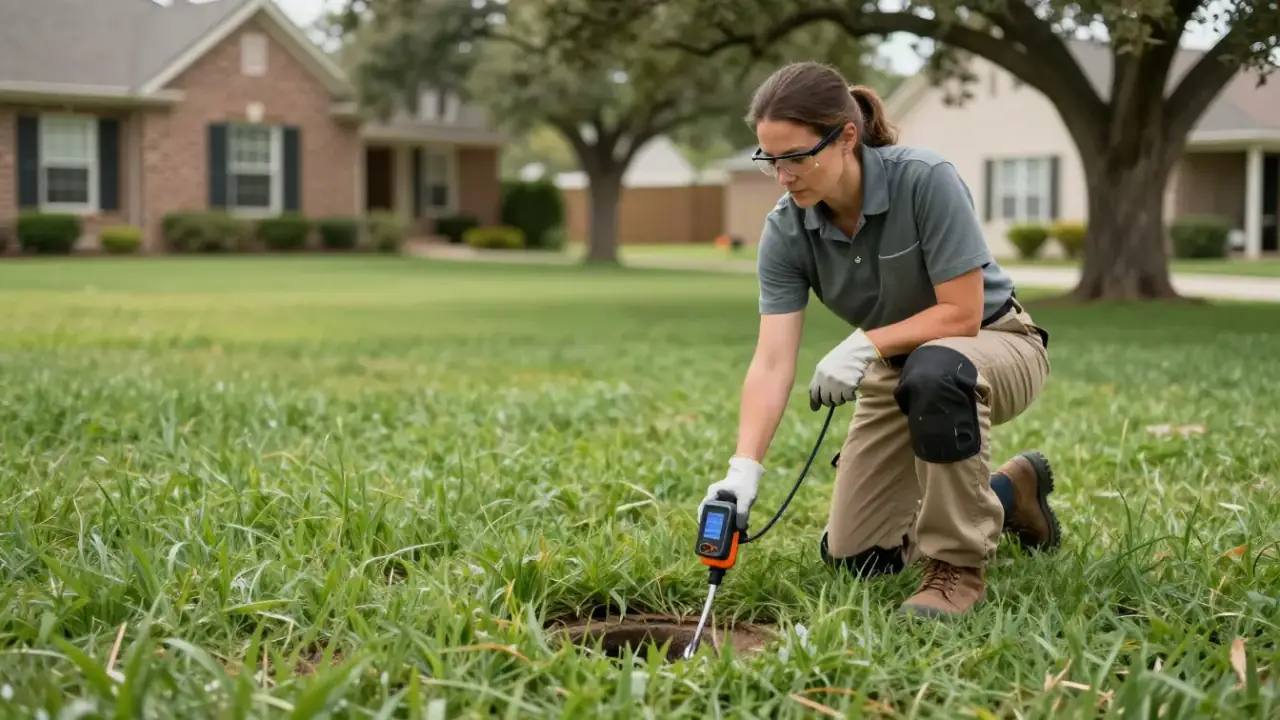
When your meter test points under the foundation, slab leak repair is the next step. We pinpoint the break with thermal imaging, then repair through the smallest possible access point to protect your flooring and foundation.
View service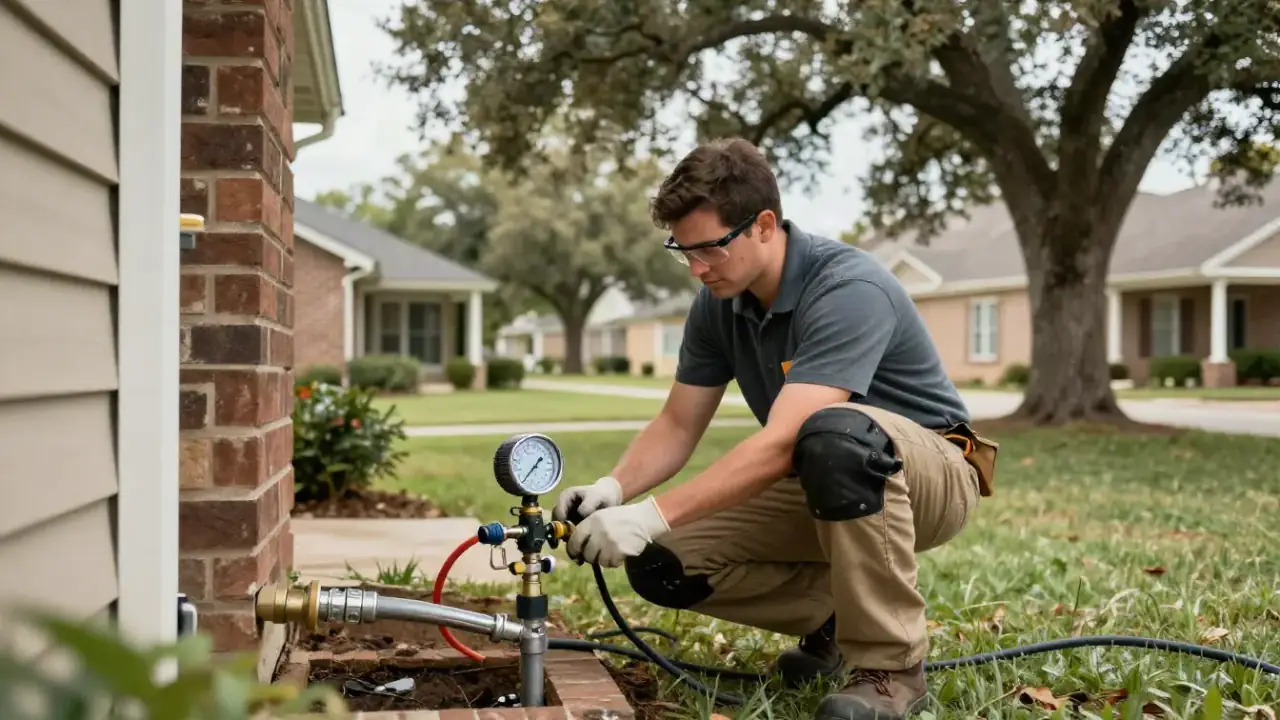
A meter that creeps does not always mean a pipe failed. We audit irrigation zones, pool fill lines, and toilet flappers to find the real culprit before you pay for excavation you did not need.
View service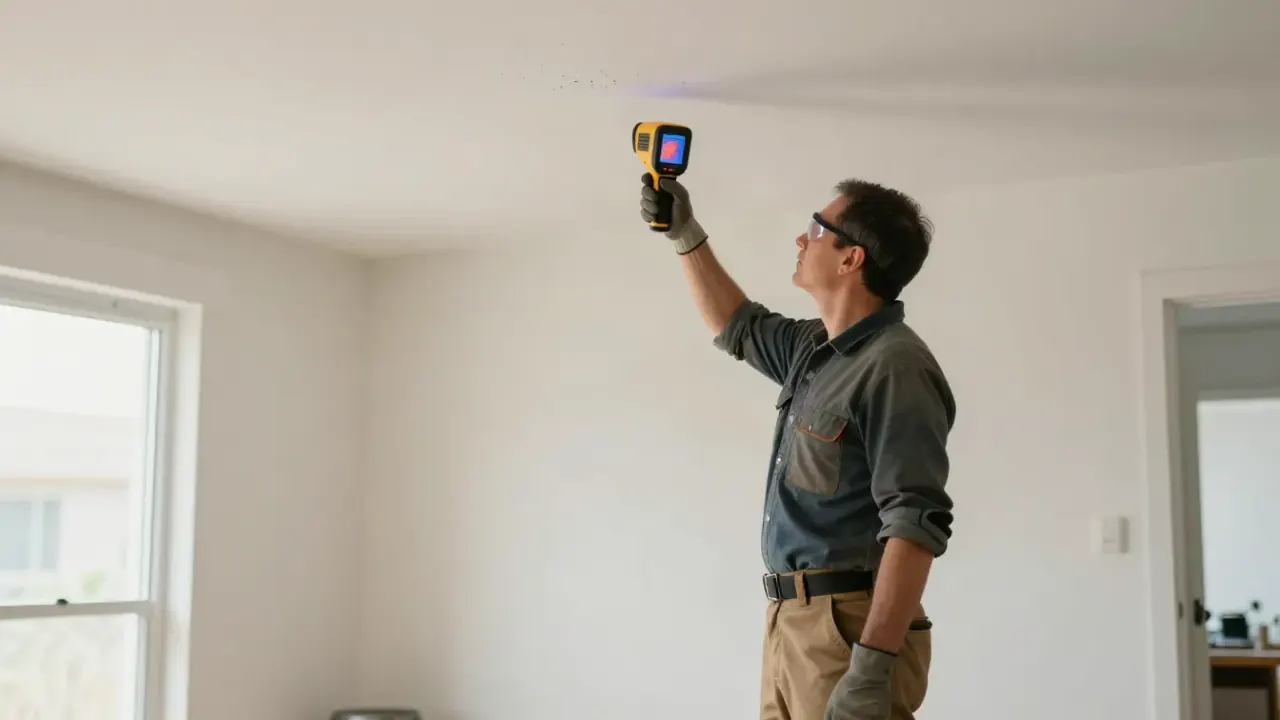
The line from the city meter to your house is a common failure point in older Spring neighborhoods. We locate the break, then repair or replace the run in copper or PEX tubing and pressure-test it before backfill.
View service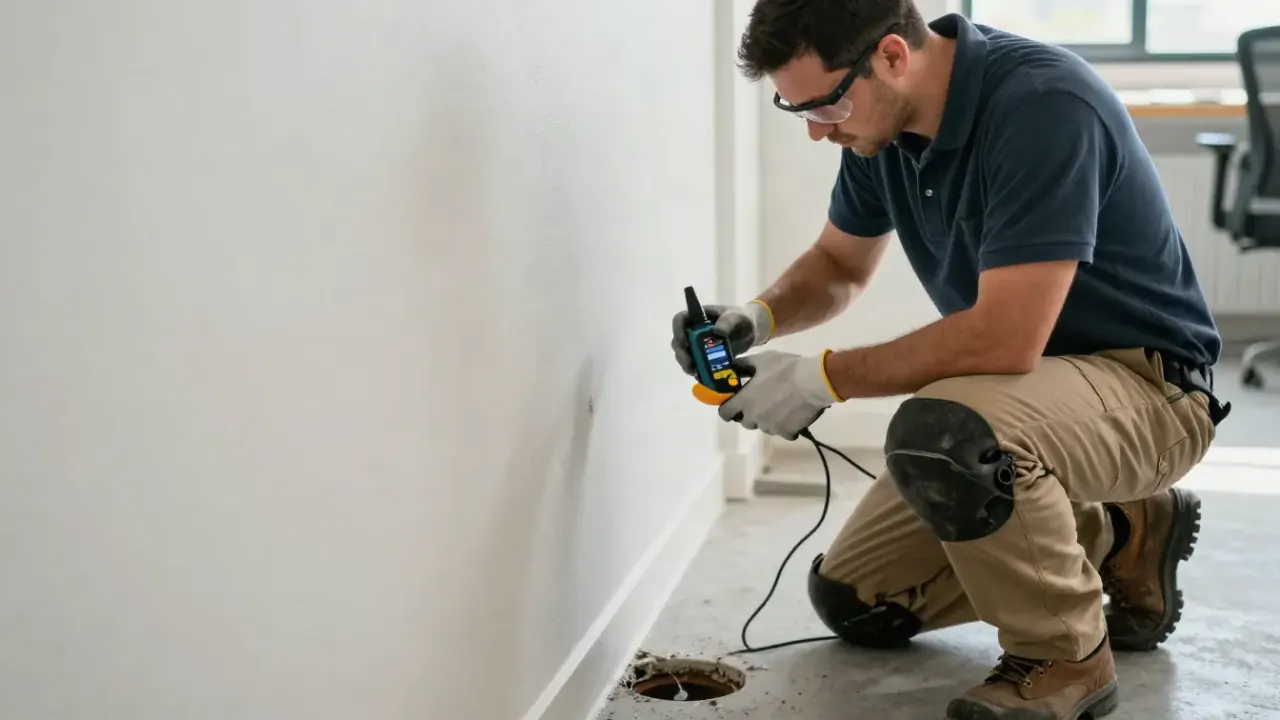
Restaurants, offices, and retail spaces in Spring lose thousands of gallons to hidden leaks. We work after hours to avoid disrupting business and document the meter data your landlord or insurer will ask for.
View service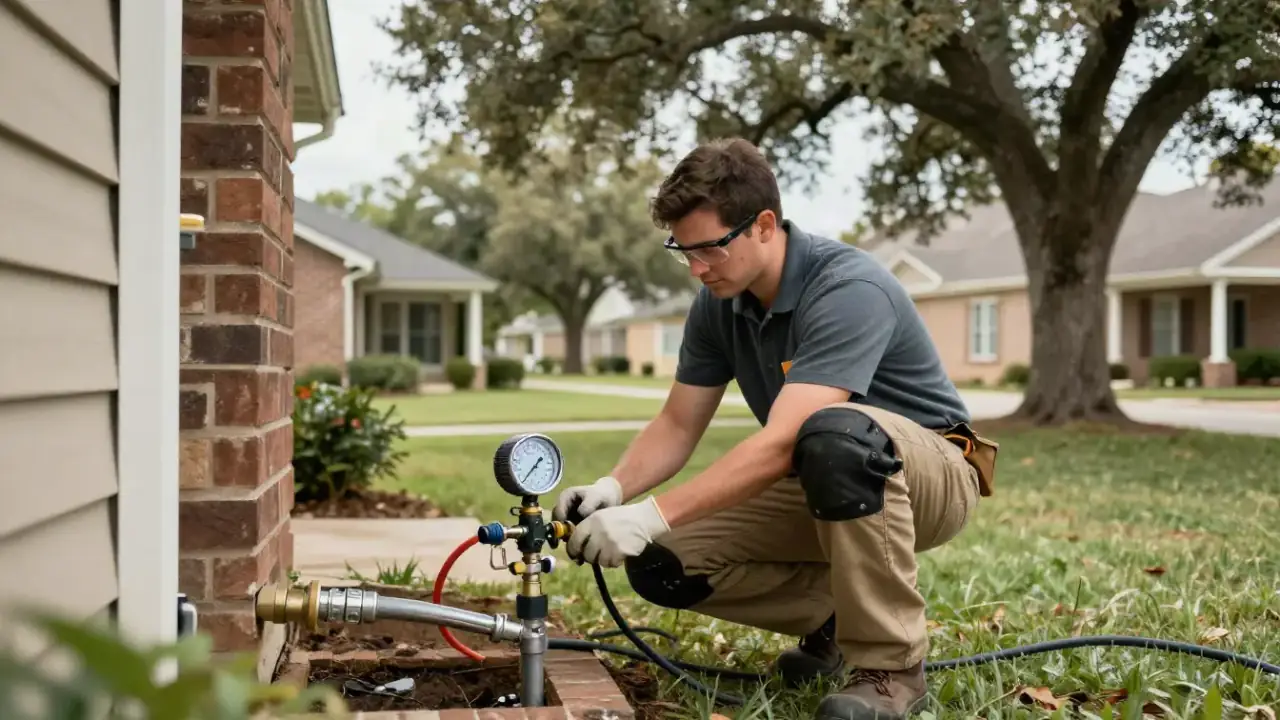
Call (281) 248-8538 and we will get a licensed tech scheduled, usually the same day. We answer the phone 24/7 for active leaks, and we cover Spring, Harris County, and the surrounding communities. Tell us what you are seeing and we will bring the right gear.