Focused arrival windows
Useful updates and clear arrival timing.
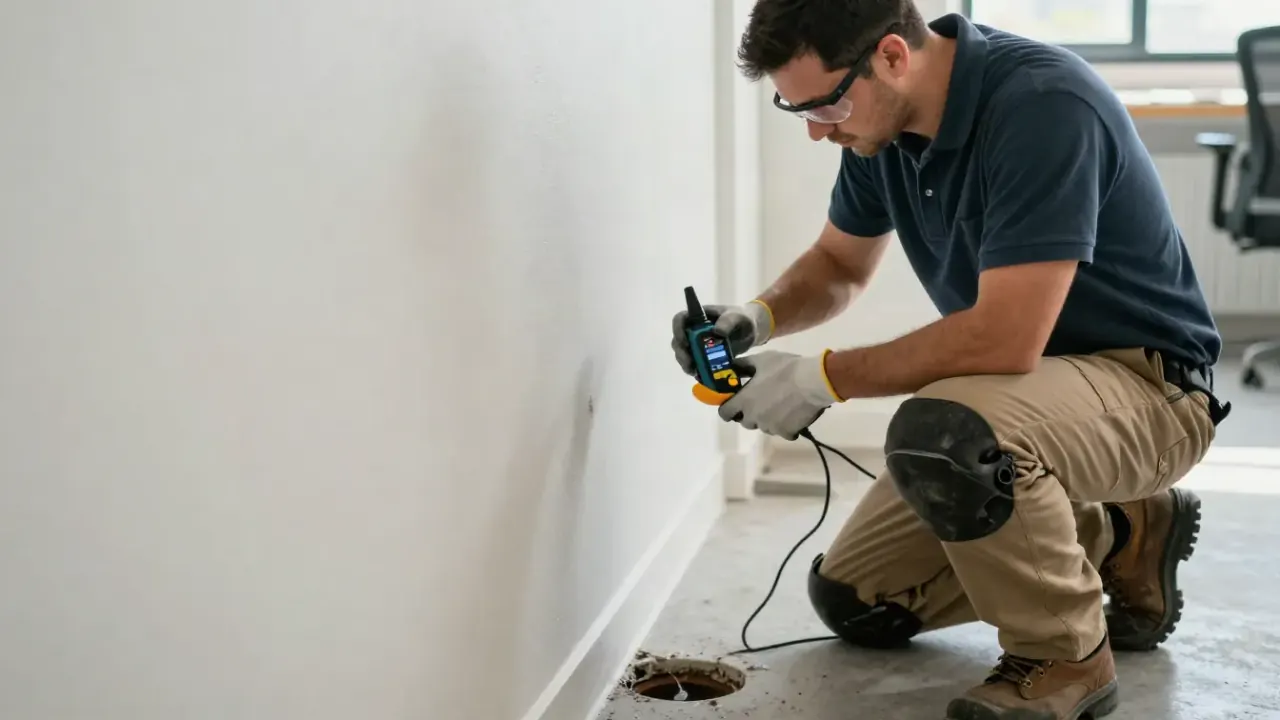
Leak Detection in Spring Creek Forest means finding the water you cannot see, before it rots framing or heaves a slab. We work the wooded streets around Spring Creek Forest Preserve and the older pockets of 77379 every week, using acoustic leak detection equipment and a thermal imaging camera to pinpoint slab leaks, service line breaks, and irrigation leaks without tearing up your yard. You get a straight answer, a fixed price, and a dry house.
Useful updates and clear arrival timing.
Review the approach and price before deciding.
Equipped vehicles and respectful cleanup.
Neighbors serving neighbors with follow-through.
Leak Detection in Spring Creek Forest is the work of finding water that has escaped your pipes before it damages your slab, framing, or foundation. This area is not like the open subdivisions west of I-45. Spring Creek Forest sits under a heavy tree canopy near Spring Creek Greenway, and those mature roots push hard against underground pipe. Add the clay soil that swells when it rains and shrinks in a dry summer, and you get movement that cracks copper and pulls fittings apart. We run water leak detection Spring Creek Forest homeowners call us for after a jump in the bill, a warm spot on the floor, or water where it should not be. Our technicians carry a pressure testing kit, a pipe locator, and a video pipe inspection camera on every truck. We serve Spring Creek Forest Estates, Spring Creek Village, Forest Creek, and Spring Creek North, and we know which streets have original 1980s plumbing and which have already been repiped.
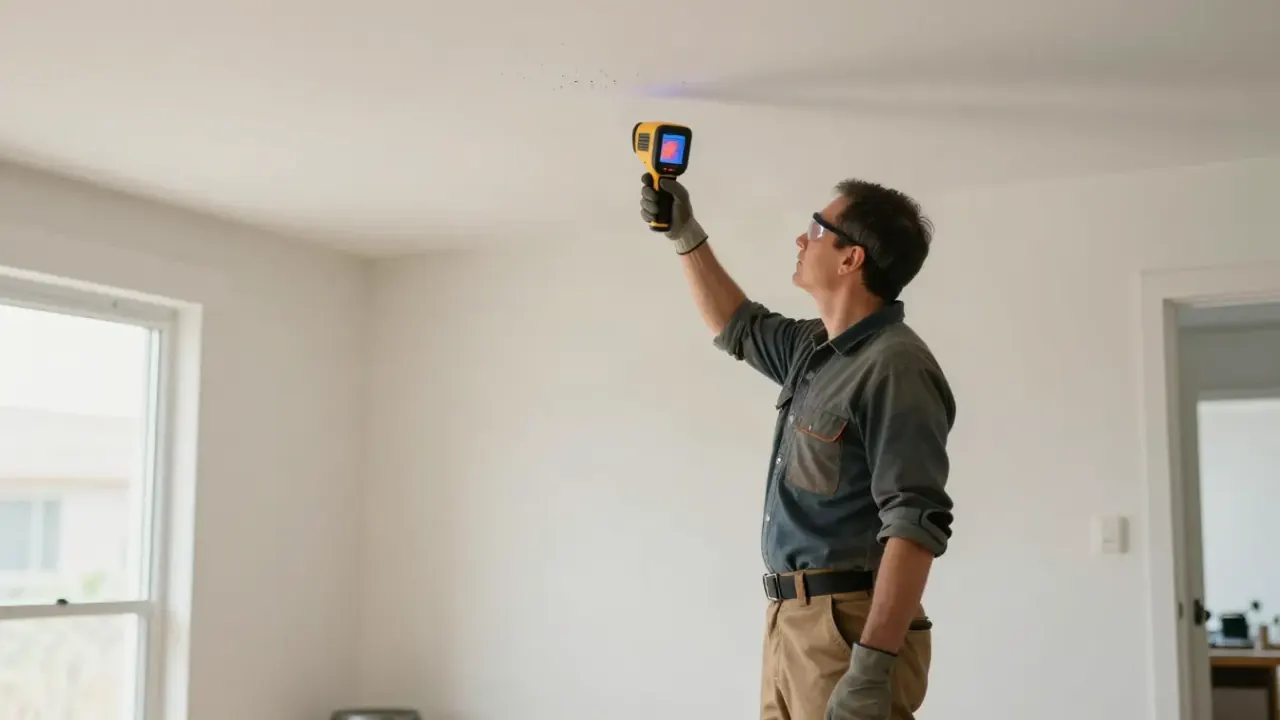
Demand for Leak Detection in Spring Creek Forest runs year-round, but it spikes after a dry summer cracks the clay and after the first hard freeze. If you are searching for Leak Detection Spring Creek Forest TX near me, here is what we actually do on your street. We locate the leak first with non-invasive tools, then repair it. No guesswork, no exploratory demolition, no surprise line items.
Slab leaks are our most common call in Spring Creek Forest Estates and Spring Creek Village, where homes sit on post-tension slabs over shifting clay. We confirm the leak with acoustic leak detection equipment and a thermal imaging camera, map the line with a pipe locator, then repair with the least invasive method that will hold. Most jobs are done in one day.
View service →02A bill that doubles with no change in habits means water is leaving the system somewhere. In Spring Creek Forest, the usual suspects are an irrigation and sprinkler leak, a running toilet flapper, or a pinhole in the water service line. We isolate the meter, test each zone, and tell you exactly where the water is going before you spend a dollar on repair.
View service →03We read your meter the right way. With every fixture off, we watch the low-flow indicator and the leak dial, then pressure-test the system to separate a supply-side leak from a drain or irrigation issue. In the 77388 ZIP, we often find the culprit between the meter box and the house, where clay soil has shifted the service line.
View service →04The line from the city meter to your house takes the worst of the soil movement in Spring Creek Forest. When it fails, you get a wet stripe across the yard and a climbing bill. We locate the break, expose only what we need, and repair or replace the section with code-correct materials. Trenchless repair equipment keeps the damage to your lawn minimal.
View service →05Offices, retail, and light industrial along the Spring Creek corridor cannot shut down for a guess. We use electronic leak detection system gear and video pipe inspection camera runs to find hidden pipe leaks in walls, ceilings, and slabs without tearing a building apart. We work after hours when that keeps your business open.
View service →06A stain on the ceiling is the last sign, not the first. By the time you see it, water has been traveling along a joist or inside a wall cavity. We trace the source with a moisture meter and thermal imaging camera, fix the pipe, then confirm the cavity is dry. In two-story homes near Forest Creek, the source is often a floor above the stain.
View service →07Tree root intrusion is the leading cause of underground pipe leak calls in this neighborhood, and the wooded lots around Spring Creek Forest Preserve make it worse. Roots enter at joints and slowly widen the gap. We locate the break, clear the root mass, and repair the line so it holds. Clay soil pipe damage gets the same treatment.
View service →08A sprinkler zone that runs fine but leaves a soggy spot is leaking underground. We pressure-test each zone, find the failed head or cracked lateral, and repair it. In Spring Creek Forest, thin-wall PVC laterals installed years ago are the usual failure point. Fixing one zone often drops the water bill noticeably.
View service →09Losing an inch of water a day is not evaporation. Pool and spa leaks in Spring Creek Forest usually show up at the skimmer, the light niche, or a return fitting, and sometimes in the buried line to the equipment pad. We pressure-test the plumbing and dye-test the shell to find it without draining your pool.
View service →Every job starts the same way: we isolate the system, pressure-test it, and listen. Acoustic leak detection equipment picks up the hiss of water escaping a pressurized line, and a thermal imaging camera shows the temperature difference a slab leak leaves on the floor. If the line is under a slab or in a wall, a video pipe inspection camera confirms the damage before we cut anything. We work to the International Plumbing Code and Uniform Plumbing Code, and our repairs are done by a licensed plumbing contractor under the Texas State Board of Plumbing Examiners. Access matters here. The tree canopy on streets near Spring Creek Greenway limits where we can park a truck, and some driveways in Spring Creek Forest Estates are narrow. We plan the equipment layout before we arrive so we are not dragging hose across your neighbor's yard. If you need 24/7 Leak Detection in Spring Creek Forest, we answer the phone at 2 a.m. the same as at noon.
Roots from oaks and elms around Spring Creek Forest Preserve enter pipe joints and widen them over years. A small seep becomes a full break, and the leak often surfaces far from the actual damage point. We use a pipe locator and video pipe inspection camera to trace the line and find the exact entry point. Then we clear the root mass and repair the section, so we are not digging up half the yard chasing a leak that moved.
The heavy clay under most of Spring Creek Forest expands when wet and contracts in drought. That movement stresses buried lines and slab plumbing, and it is the main reason we see so many water service line leaks after a dry summer. We pressure-test the full service line, not just the visible section, and repair with materials that tolerate minor movement. We also tell you which sections are at risk so you can plan ahead instead of paying for an emergency.
When the water table rises after heavy rain, a small underground leak can go undetected because the ground is already wet. Homeowners miss the early warning signs and the leak runs longer, which drives up the water bill. We test during dry spells when the ground can actually show a leak, and we use acoustic gear that separates pipe noise from ambient groundwater. If the table is high, we isolate zones one at a time to narrow it down.
The IPC sets the standards for pipe materials, joint methods, and pressure testing that our repairs must meet. It is why we do not patch a line with whatever is on the truck. The repair has to pass the same test the original install did.
Where the UPC applies, it governs how we handle water service line work and backflow protection. We follow it on every repair so the job is code-correct and passes inspection without a callback.
Plumbing work in Texas requires a TSBPE license, and we hold one. That means the person finding and fixing your leak is accountable to the state, not just to you. It also means the work is insurable and documented.
The problems we see here are not random. They come from the specific mix of clay soil, mature trees, older plumbing, and a high water table near Spring Creek. Once you understand what drives the leaks, you can spot the warning signs earlier. Here are the four we handle most.
The clay under most of Spring Creek Forest expands when wet and shrinks in drought. That constant movement stresses the pipes running through and under the slab. Over time, a joint or a bend in the copper pipe fails. We confirm the leak with acoustic leak detection equipment and a thermal imaging camera before we cut anything. Then we repair the line with the least invasive method that will hold, and we test it under pressure before we close up.
The wooded lots near Spring Creek Forest Preserve and Spring Creek Greenway have mature root systems. Roots find the smallest gap at a pipe joint and grow into it, slowly widening the opening until it leaks. Clay soil pipe damage makes it worse. We use a pipe locator and video pipe inspection camera to find the exact entry point. Then we clear the root mass and repair the section. We also tell you which other sections are at risk so you can plan ahead.
When the clay dries and contracts, the soil pulls away from the service line. The line loses support and can crack or pull apart at a fitting. This is why we get a wave of service line calls every fall after a hot, dry summer. We pressure-test the full line, not just the visible section, and repair with materials that tolerate minor movement. Trenchless repair equipment keeps the damage to your lawn minimal, and we restore the surface when we are done.
Many Spring Creek Forest homes have irrigation systems installed years ago with thin-wall PVC pipe. The laterals crack at the joints, and the leak runs underground where you cannot see it. The only clue is a soggy zone or a rising water bill. We pressure-test each zone individually to isolate the failure, then repair the lateral or head. We also check the backflow assembly, since a failed backflow preventer can waste water silently. One repaired zone often drops the bill noticeably.
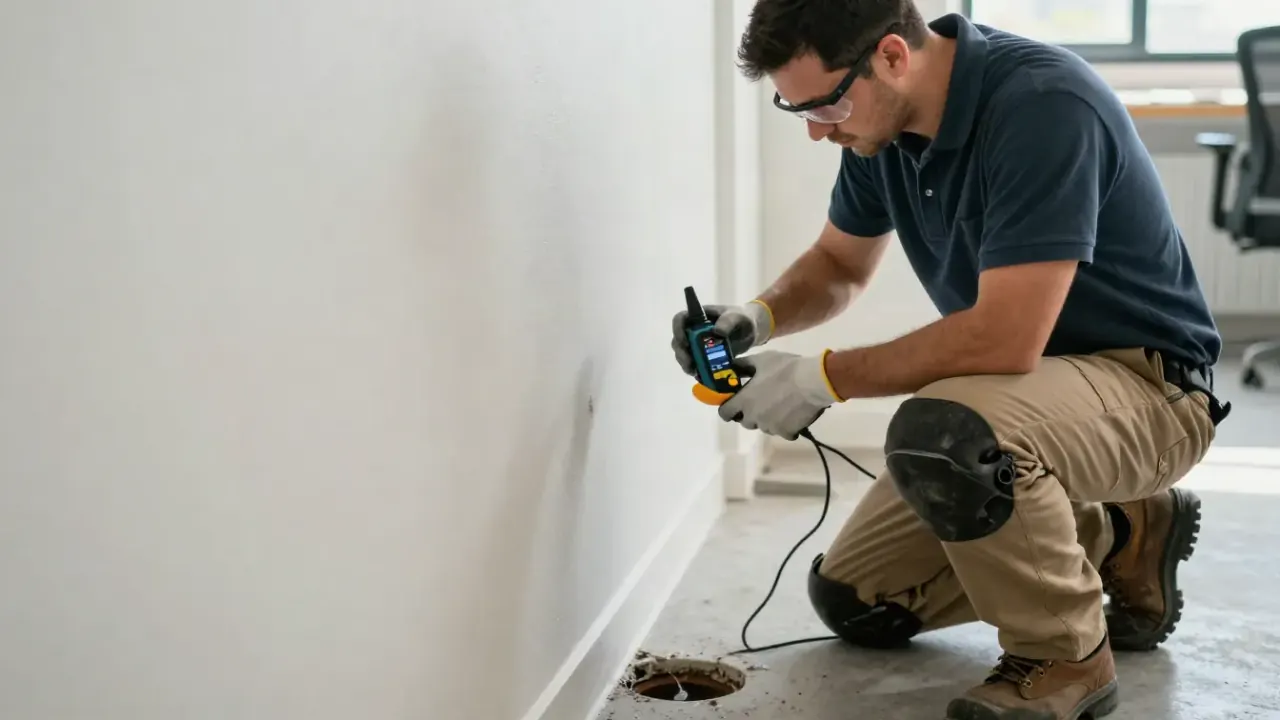
A visible supply line under a sink is quick to find. A slab leak or an underground pipe leak under clay soil takes longer and more equipment. Depth and access are the two biggest drivers of the detection cost in Spring Creek Forest.
Copper pipe that has been stressed by decades of soil movement can be brittle and harder to repair cleanly. PEX tubing and CPVC pipe are usually faster to work with. Older homes with original plumbing often need more careful handling.
A simple pipe repair clamp or a new section of pipe is affordable. Trenchless repair equipment or epoxy pipe lining costs more but saves your yard and driveway. We walk you through both options and let you decide.
Spring Creek Forest is easy to get turned around in if you do not know it. The streets wind, the tree canopy hides signage, and a GPS will happily send you down a dead-end. We use the landmarks below as orientation points so we reach you fast, especially on emergency calls after dark. If you are near one of these and not sure how to describe your location, just tell us the landmark and we will find you.
A large green space that anchors the neighborhood. We use it as a north-south reference point when routing to streets on the wooded side of the subdivision, where the canopy can make addresses hard to spot.
The greenway corridor runs through the area and helps us separate the streets that back up to the creek from those that do not. It is a reliable way to orient a call when the address is ambiguous.
A nearby preserve that marks the western edge of our regular service area. When a call comes in near Kleb Woods, we know which access road to take to avoid the longer residential loop.
A local park that serves as a clear landmark for the surrounding residential streets. It helps us confirm we are in the right pocket of the neighborhood before we start looking for the address.
A well-known botanical site to the south that helps us gauge drive time and route around the busier intersections when we are coming from that direction.
A small retail and service cluster that serves the surrounding neighborhoods. We handle commercial plumbing leak location for businesses here, usually after hours so the work does not interrupt their day.
The main east-west route through the area. We use it to reach Spring Creek Forest quickly from the south and to route around residential congestion during peak hours.
The outer loop gives us fast access to Spring Creek Forest from other parts of Harris County, which helps on emergency calls when we are coming from a job outside the neighborhood.
We cover the whole Spring Creek Forest area, from the wooded streets near the preserve to the newer pockets off Spring Creek North. Each neighborhood has its own plumbing personality, and we know which ones call us for slab leaks and which call for irrigation problems. Here is where we work most.
The core of our slab leak work. Many homes here were built with original copper pipe that has now seen decades of clay soil movement. We see a lot of warm spots on floors and unexplained bill jumps, and we know which streets have already been repiped. We are usually on-site within the hour for emergency calls in the Estates.
A mix of older and updated homes, with a fair number of under-house and ceiling leaks. The tree cover is heavy, so underground pipe leaks from root intrusion are common. We handle both the locate and the repair on the same visit. Close to our regular route, so same-day scheduling is almost always available.
Two-story homes here tend to show ceiling and wall leaks from upper-floor plumbing. A stain downstairs often traces back to a fitting above. We use a moisture meter and thermal imaging camera to follow the water to its source before opening anything. About ten minutes out, with quick access off the main roads.
Older pier and beam homes make under-house leaks a real concern. Water can run under the floor for weeks before the subfloor softens. We crawl the space, find the leak, and check for mold from hidden leaks before we close it up. We schedule Spring Creek North calls in the same dispatch window as the rest of the area.
These are real jobs from the neighborhood, with the details that matter: what the homeowner noticed, what we found, and what it took to fix it. They show how different the leaks here can be, even on the same street.
A homeowner in Spring Creek Forest Estates saw the water bill jump by $140 in one month with no change in usage. No visible water inside or out. We isolated the meter and watched the low-flow indicator spin with every fixture off. Pressure testing pointed to the service line. A pipe locator traced it to a pinhole under the front yard where clay soil had shifted the line. We repaired the section the same day. The next bill dropped back to normal, and the homeowner avoided a full line replacement.
A two-story home in Forest Creek had a brown stain spreading across the downstairs ceiling. The homeowner assumed a roof leak. A moisture meter showed the ceiling was wet from above, not from the roof. We traced it to a supply line fitting on the second floor that had been seeping into the joist cavity. Thermal imaging confirmed the path. We repaired the fitting and dried the cavity. The stain stopped spreading, and no mold developed. Total job time was under four hours.
A Spring Creek North home on pier and beam had a musty smell and a soft spot in the hallway floor. The crawl space was damp but no leak was obvious. We crawled the space and pressure-tested the under-floor lines. A copper pipe had a pinhole leak spraying into the soil, hidden by the moisture already in the ground from the high water table. We repaired the pipe, treated the area for mold from hidden leaks, and the musty smell cleared within a week. The subfloor was saved.
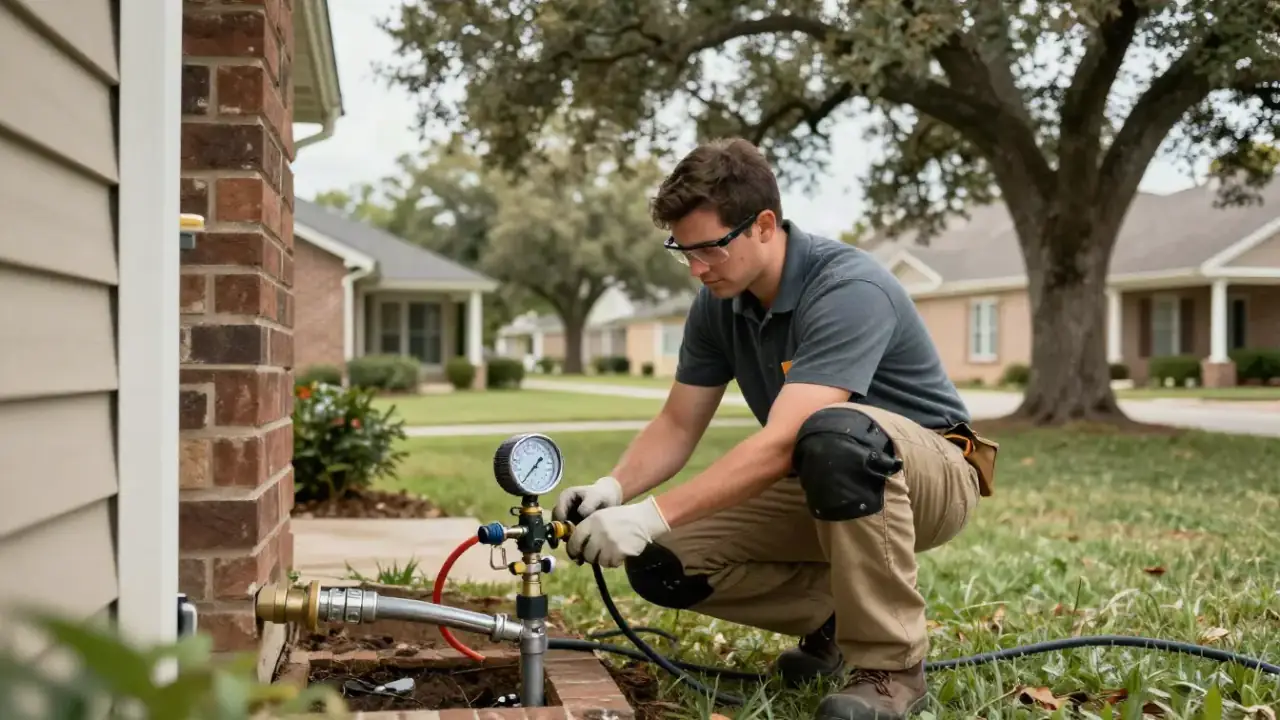
Called about a slab leak in Spring Creek Forest Estates and they were at the house the same afternoon. The tech used a thermal camera and found it in about twenty minutes. No tearing up the whole floor. Fixed it the next morning and the price was exactly what they quoted. That is rare.
Our water bill doubled and we had no idea why. They tested the meter, checked every zone, and found a broken sprinkler lateral under the lawn. Repaired it in one visit. The next bill was back to normal. I have already recommended them to two neighbors in Forest Creek.
We had a ceiling stain and were worried about mold. They traced it to a fitting upstairs, fixed it, and dried everything out. They also checked the crawl space for us since the house is older. Professional, on time, and they explained what they were doing at every step.
Spring Creek Forest has a Gulf Coast climate: hot, humid summers, mild winters, and a rainy spring. Each season puts different stress on your plumbing. Knowing what to watch for helps you catch a leak before it becomes a repair. Here is the seasonal pattern we see.
Heavy rain raises the water table near Spring Creek, and saturated soil can hide an underground leak. Irrigation systems come back on after winter, and that is when failed sprinkler laterals show up as soggy zones in the yard.
The clay soil dries and contracts, which stresses buried lines and slab plumbing. This is peak season for water service line leaks and slab leaks in Spring Creek Forest. Higher water use also makes a small leak harder to spot on the bill.
After a dry summer, the soil pulls away from pipes and we see a wave of service line breaks. Leaves and debris can also clog drains, which does not cause a leak but can mask one. This is a good time to get a pressure test.
Hard freezes are rare here but they happen, and they burst pipes. Exposed lines in attics, garages, and crawl spaces are most at risk. A freeze can also crack a backflow assembly, which then leaks when it thaws.
Spring Creek Forest sits in the middle of a service region we cover every day. If you are just outside the neighborhood, we probably already work your street. Here is how the surrounding areas connect to us.
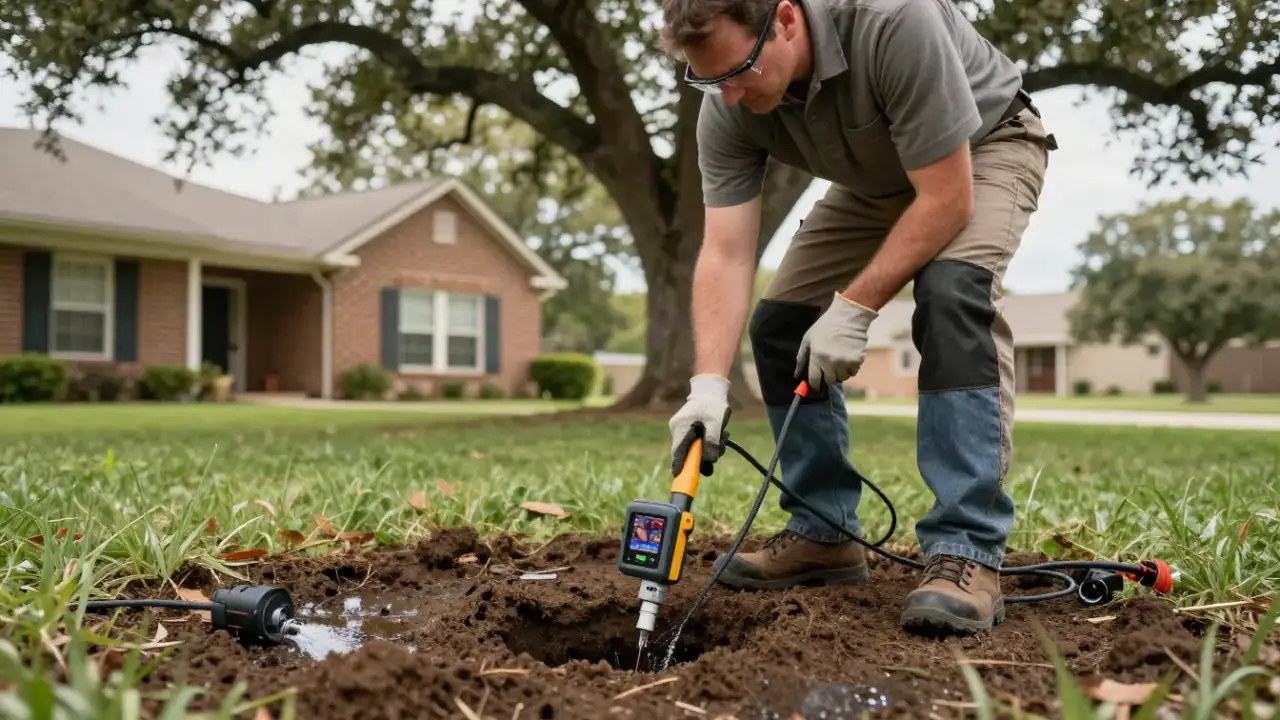
A short drive south. We often move between Old Town Spring and Spring Creek Forest on the same day, especially for older-home slab leaks.
Local coverage and details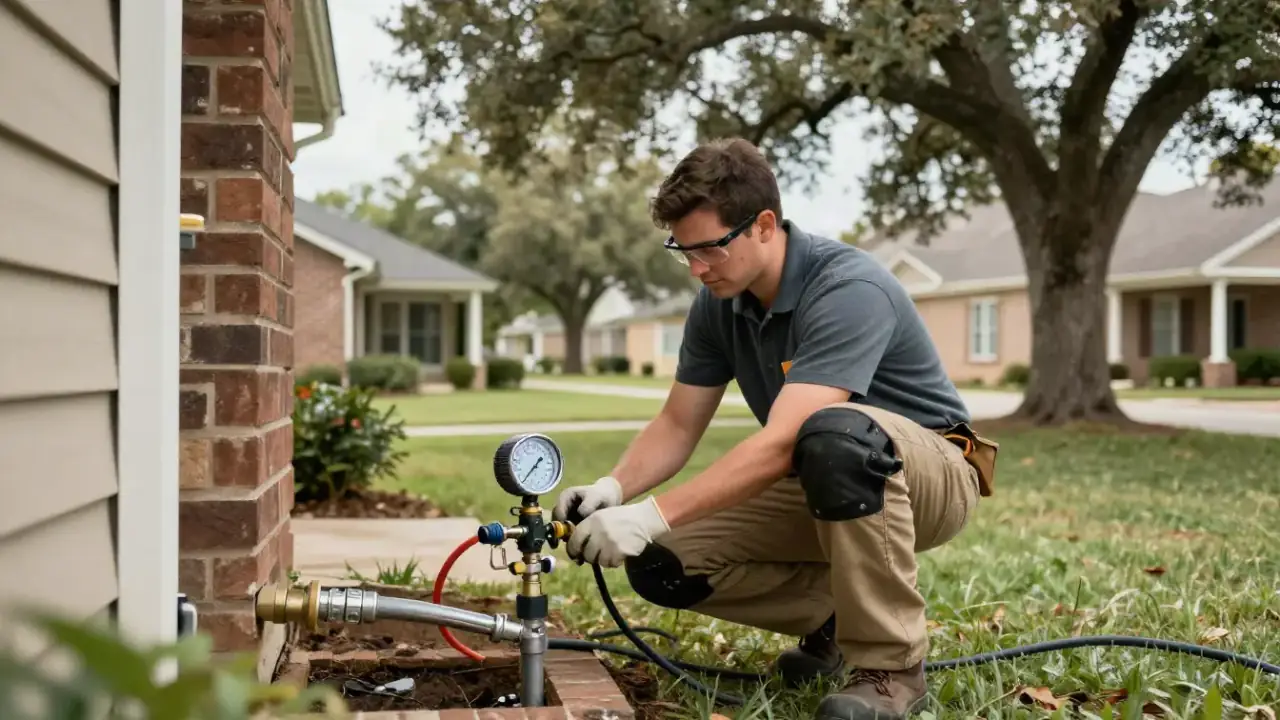
West of us along the Spring Creek corridor. Many of our customers there found us through a neighbor in Spring Creek Forest.
Local coverage and details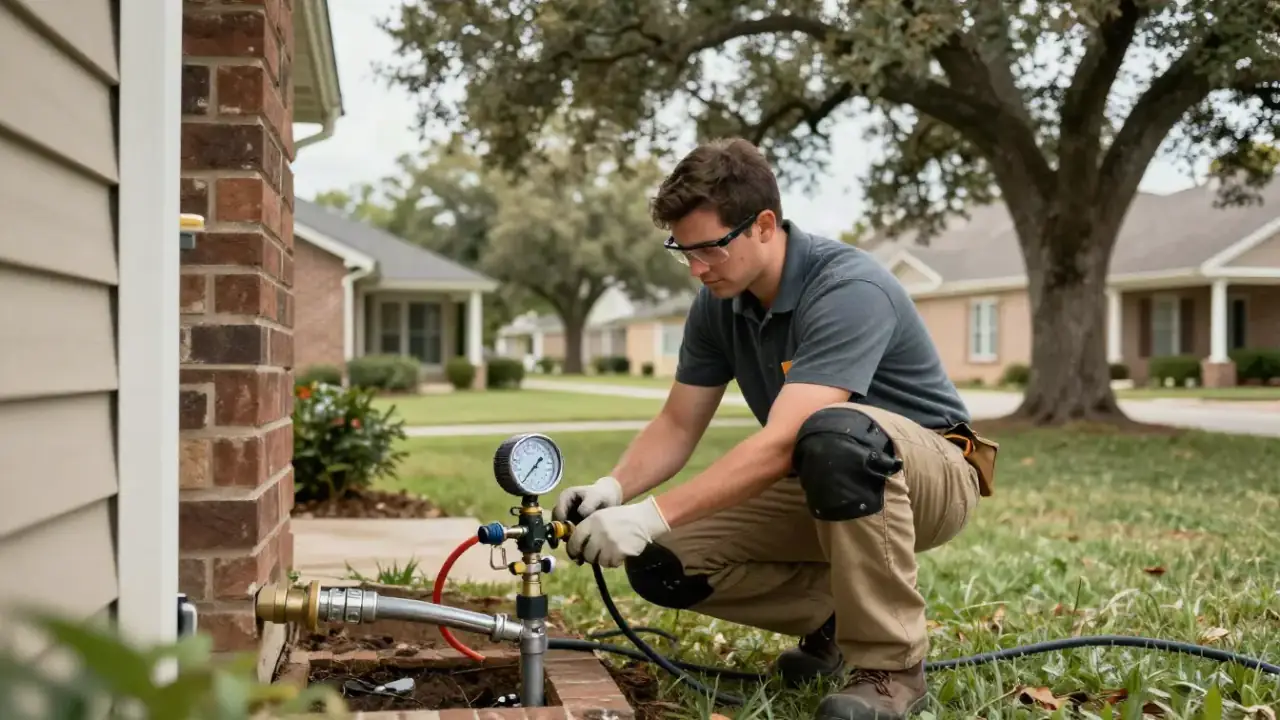
Just south of Spring Creek Forest, with similar clay soil and tree cover. We handle the same slab and service line leaks there.
Local coverage and details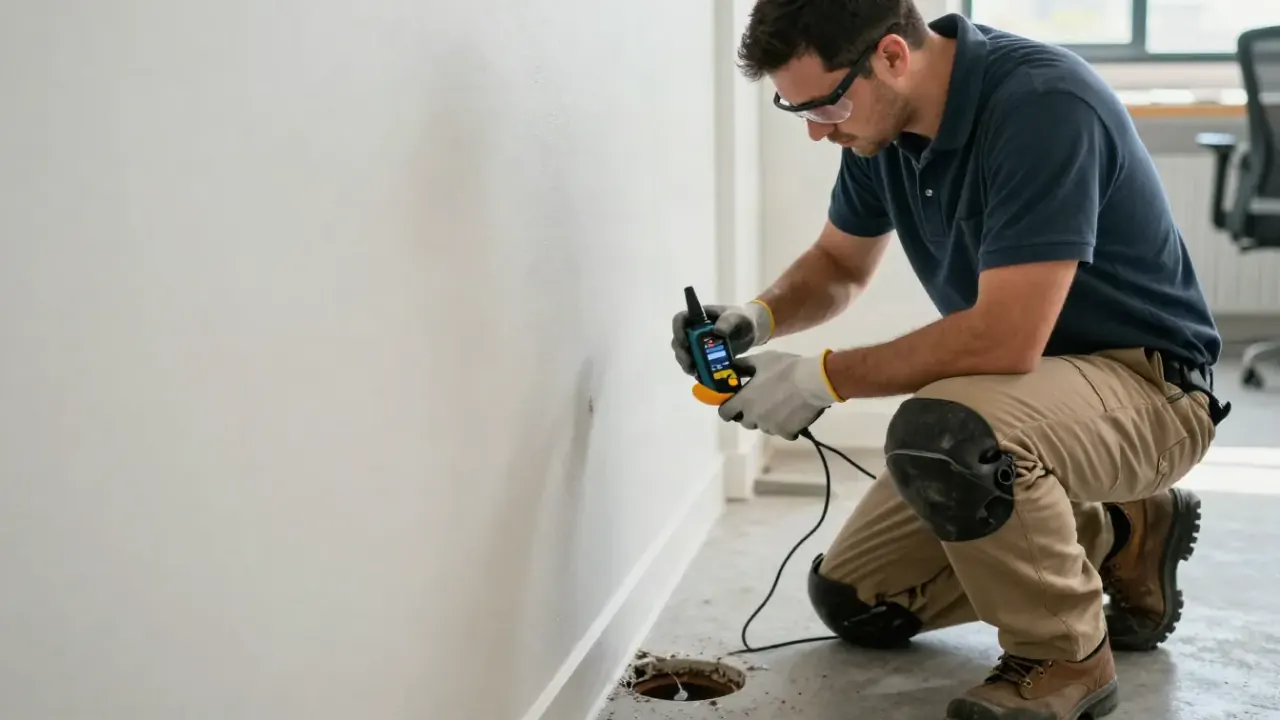
A nearby community to the northwest. We cover it on the same route as Spring Creek North and Forest Creek.
Local coverage and detailsNot every company that answers the phone actually finds leaks. Some guess, some cut first and ask later, and some hand you a bill with no explanation. Here are the questions that separate a real leak detection contractor from a parts changer. Ask them before you book.
A company that relies on guesswork will open walls and dig up yards until they get lucky. We use acoustic leak detection equipment, a thermal imaging camera, and a video pipe inspection camera. If they cannot name their tools, they are probably guessing.
Plumbing work in Texas requires a TSBPE license. A licensed contractor is accountable to the state and carries insurance. An unlicensed handyman may be cheaper, but you have no recourse if the repair fails or causes damage.
Some companies waive the detection fee if you hire them for the repair. Others charge separately. Either is fine, but you should know the number before they arrive. We quote the detection up front and tell you the repair cost before we start.
Some leak detection companies only locate the problem and leave the repair to someone else. That means two contractors, two schedules, and two bills. We locate and repair on the same job, so nothing gets lost between the two.
A repair without a warranty is a gamble. Ask how long the work is covered and what it includes. We stand behind our repairs with a written warranty, and we test the line under pressure before we leave so you know it holds.
Texas Commission on Environmental Quality
Occupational Safety and Health Administration
$2M general liability and full workers compensation
Member
Member
Most leak detection visits in Spring Creek Forest run $180 to $450 in 2026, depending on how deep the leak is and what equipment we need. A slab leak or underground pipe leak takes longer than a visible supply line. We quote the detection up front, and if a repair is needed, you get that price before we start. No hourly surprises.
The best company is the one that finds the leak without tearing up your house and stands behind the repair. We are licensed by the Texas State Board of Plumbing Examiners, we use acoustic and thermal gear on every job, and we repair what we find. Ask any company what tools they use and whether they warranty the work. That tells you more than a review.
Yes. We answer the phone 24/7, including weekends and holidays. Active leaks get priority, and a technician is usually on-site within the hour. If you hear water running with everything off or see water where it should not be, call us at (281) 248-8538 and we will get someone out.
Start with a company that works this area regularly and knows the local plumbing. Spring Creek Forest has clay soil, heavy tree cover, and older homes, and those factors change how a leak is found. Ask if they carry acoustic leak detection equipment and a thermal imaging camera. If they do, and they are licensed, you are on the right track.
In most cases, yes. We use acoustic leak detection equipment to listen for the leak and a thermal imaging camera to see the temperature difference it leaves. A pipe locator maps the line, and a video pipe inspection camera confirms the damage. We only open the slab or wall once we know exactly where the leak is.
Not seeing your question? Our local team can help you understand urgency, scheduling and what to expect.
Ask the local team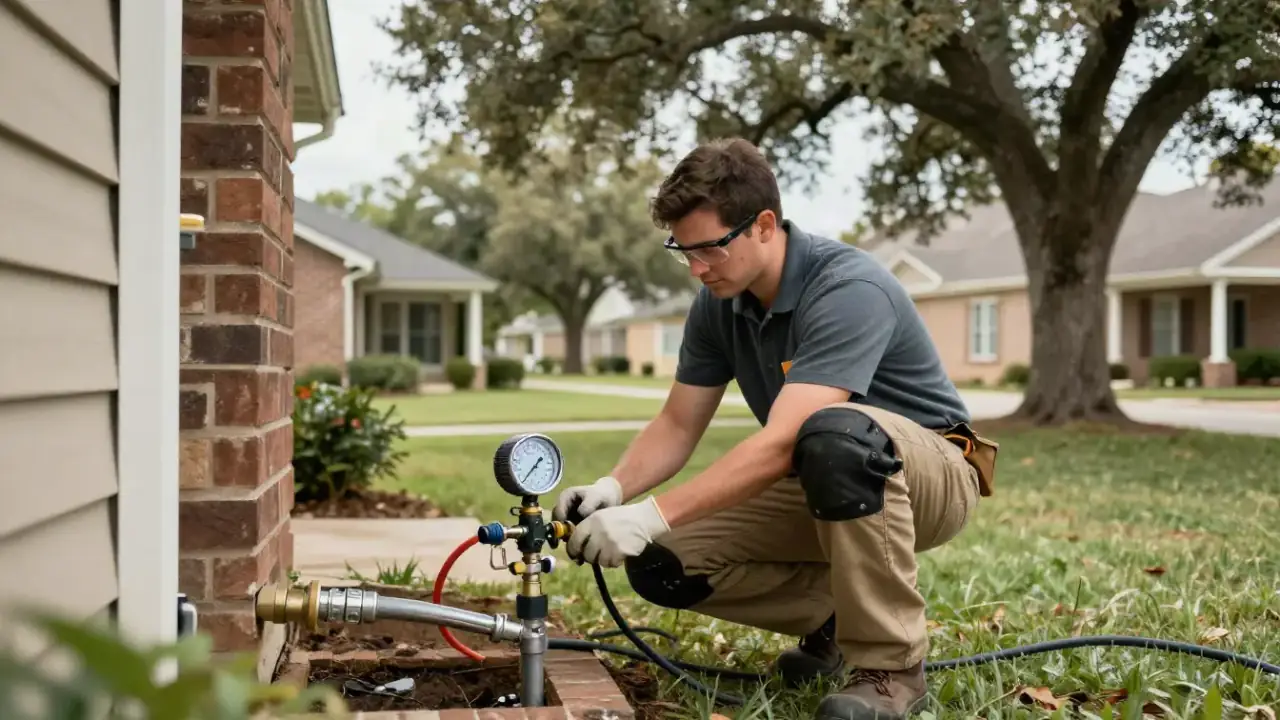
Call (281) 248-8538 and we will get a licensed tech scheduled, usually the same day. We answer the phone 24/7 for active leaks, and we cover Spring, Harris County, and the surrounding communities. Tell us what you are seeing and we will bring the right gear.