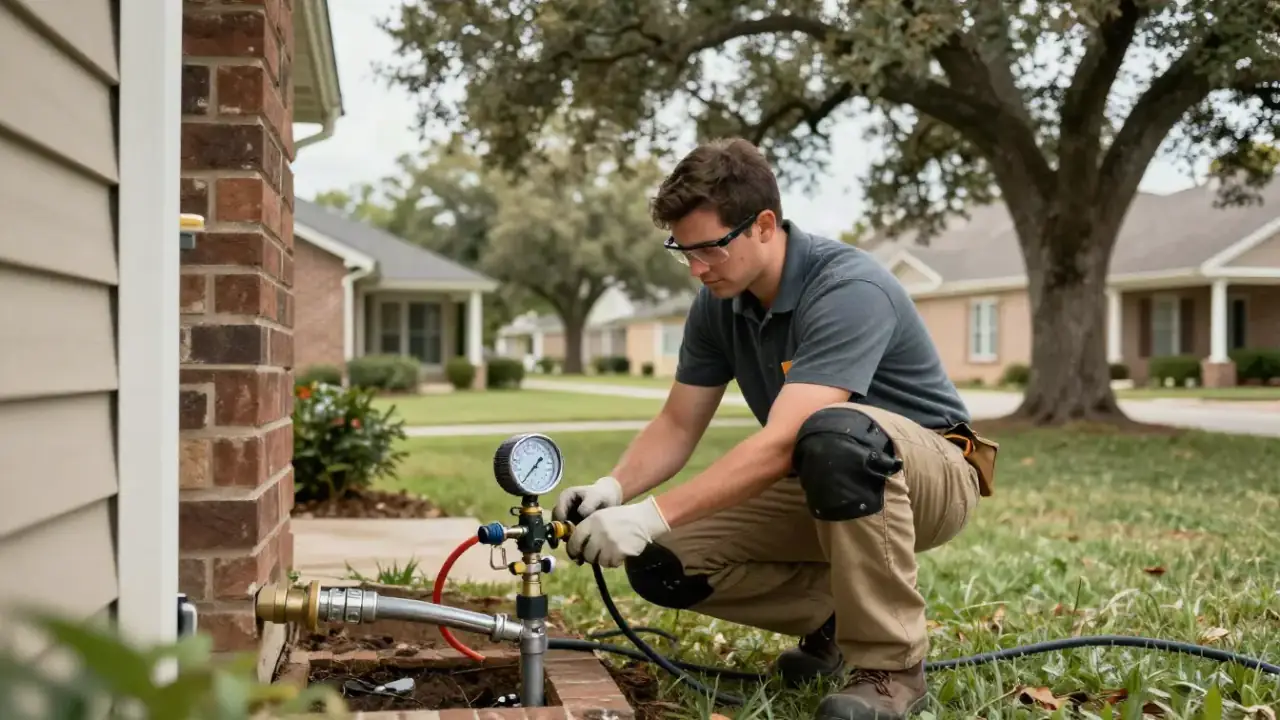
Repair or Repipe: Choosing the Right Fix for Aging Pipes
Repair or repipe aging pipes in Spring TX? We break down costs, lifespan, and the warning signs that decide which fix your home actually needs.
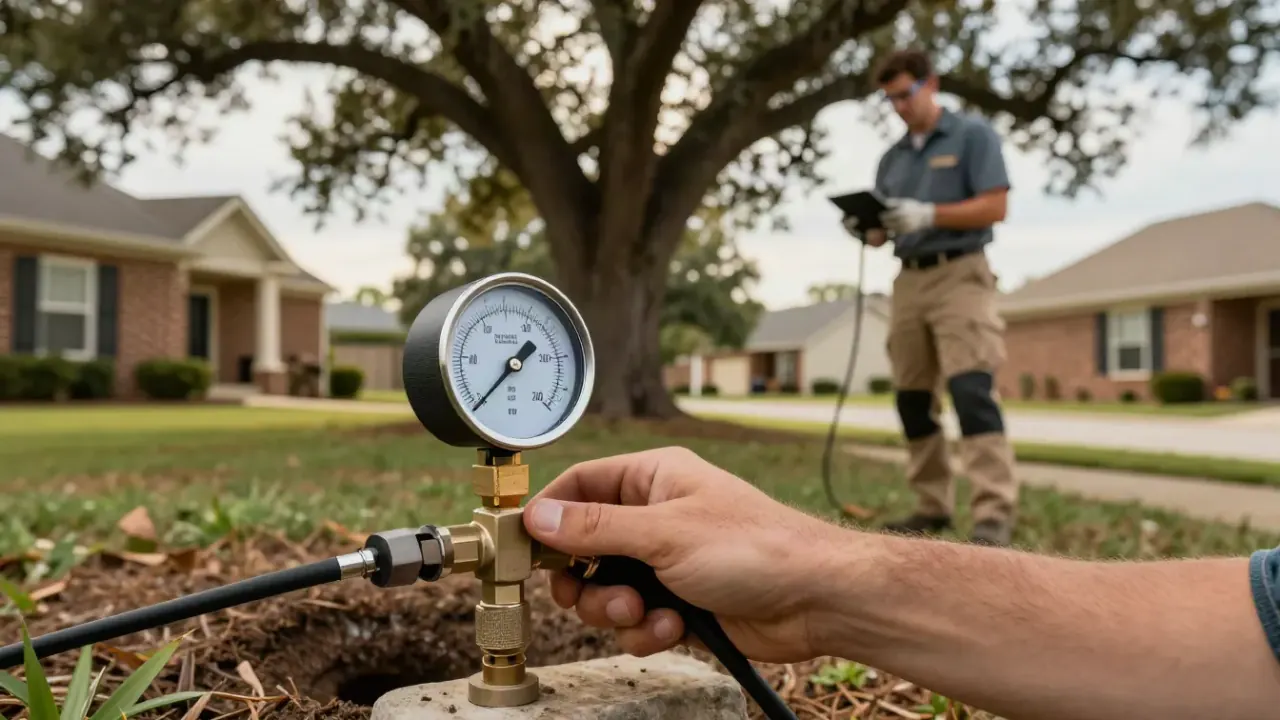
If your Spring, Texas home has pipes older than 25 years and you are chasing the second or third leak in as many years, repipe the house - do not repair again. A single leak on a 15-year-old copper line is a repair; recurring leaks, rusty water, and pinholes every few months on 30-year-old galvanized or polybutylene pipe mean the whole system is failing and patching it just buys you time until the next one. This guide walks through how to tell which situation you are in, what repiping costs in Spring in 2026, how long the job takes, and the mistakes we see homeowners make when they put off the decision.
Repair or repipe aging pipes in Spring TX is really a question of how much life is left in the system, not how much the next patch costs. We have run both kinds of jobs across Spring for years, and the pattern is consistent: the homes that repipe early spend less overall than the ones that keep repairing.
Repair or Repipe Aging Pipes in Spring TX: The Short Answer
Repair or repipe aging pipes in Spring TX is a plumbing decision that comes down to pipe material, age, and leak frequency - repair when the pipe is under 25 years old and the leak is isolated, repipe when the pipe is older, failing in multiple spots, or made of a material with a known short lifespan. Here is the rule of thumb our technicians use on the first visit:
- Repair if the pipe is copper or PEX, under 25 years old, and you have had one leak in the last two years.
- Repair with a close eye if the pipe is 25 to 35 years old and the leak is in an accessible spot like a garage wall or under a sink.
- Repipe if the pipe is galvanized steel, polybutylene, or older than 35 years - regardless of how the current leak looks.
- Repipe if you have had two or more leaks in 12 months, or if the water pressure has dropped noticeably at every fixture.
That is the whole decision in four lines. Everything below is the reasoning, the numbers, and the local details that make it stick.
If you are not sure which category your home falls into, our team handles Leak Detection Spring TX as a first step - we locate the leak, identify the pipe material, and tell you plainly whether a patch will hold or whether you are looking at a repipe.
How to Tell If Your Spring Home Has Aging Pipes
Most Spring homes built before 1995 were plumbed with either copper or galvanized steel, and the ones built between roughly 1978 and 1995 in certain subdivisions used polybutylene - a gray or blue-gray plastic pipe that fails at the fittings far more often than copper does. If you do not know what is behind your walls, the build year on your Harris County appraisal record is the fastest clue.
Spring's housing stock splits into three rough eras, and each one has its own pipe story:
- Pre-1980: galvanized steel supply lines. These rust from the inside out. By year 40 they are often choked to half their original diameter, which is why the shower pressure in these homes feels weak even when the city main is fine.
- 1980-1995: copper in most subdivisions, polybutylene in a subset. Copper is durable but develops pinhole leaks as it ages, especially in areas with aggressive water chemistry.
- 1996-present: copper or PEX. PEX has a 40-plus year service life and rarely needs a full repipe inside 30 years.
We see the oldest pipe stock in neighborhoods like Leak Detection in Old Town Spring, where the housing dates back decades earlier than the master-planned subdivisions north of FM 2920. If you are in one of those older streets, assume galvanized until you have seen the pipe with your own eyes.
Two quick checks you can do yourself before calling anyone:
- Shut off every fixture in the house and watch your water meter. If the low-flow indicator is still spinning, you have a leak somewhere on the system.
- Open a cold tap after it has sat overnight. Brown or rust-colored water on the first draw points to corroding galvanized pipe, not a city supply issue.
Repipe vs Repair in Spring: What Each Option Actually Means
Repipe vs repair in Spring is not just a price comparison - the two options solve different problems. A repair fixes the leak in front of you. A repipe replaces the entire supply system so the next leak never happens.
What a repair involves
A targeted repair means cutting out the failed section - usually 12 to 24 inches of pipe - and splicing in new material with couplings. On an accessible copper line, that is a two-to-four hour job. On a slab leak, it is a different animal entirely: we have to locate the leak precisely, then either tunnel under the foundation or reroute the line overhead. Slab work is where repair costs climb fast.
When the leak is under the slab, we handle it as Slab Leak Repair Spring TX - locating the break with acoustic and thermal equipment first so we are cutting in the right place, not guessing.
What a repipe involves
A full repipe replaces every supply line in the house with PEX or copper. We run new lines through the attic and walls, cap off the old system, and tie the new lines into every fixture. The old pipe stays in the walls - pulling it out would mean tearing up finished surfaces for no benefit. A repipe typically includes new shutoff valves at each fixture and a new main shutoff at the entry point.
For homes on a private well or with a long run from the meter, we also look at the Water Service Line Repair Spring TX side of the system, because a repipe inside the house does nothing for a failing line between the meter and the foundation.
Repipe Cost in Spring, Texas: What 2026 Pricing Looks Like
Repipe cost in Spring, Texas in 2026 runs roughly $4,500 to $15,000 for a typical single-family home, with most Spring jobs landing between $6,000 and $10,000 depending on square footage, fixture count, and how much wall access the layout allows. A single targeted repair, by contrast, usually runs $350 to $1,200 for an accessible leak and $1,500 to $4,500 when the leak is under the slab.
Here is how the numbers break down for a 2,000 to 2,500 square foot Spring home:
- Partial repipe (one wing or one bathroom group): $2,500-$5,000
- Full PEX repipe, standard layout: $6,000-$9,500
- Full copper repipe: $9,000-$15,000 (copper material alone runs three to four times PEX)
- Slab leak repair, tunnel access: $1,800-$4,500
- Slab leak repair, overhead reroute: $2,500-$6,000
The math that matters is not the sticker price of one repair versus one repipe. It is the cumulative cost. If you have paid for three repairs at $800 each in four years, you have already spent $2,400 on a system that is still failing. That money does not come back, and the fourth leak is already forming somewhere you cannot see.
One more cost most homeowners forget: water damage. A slow leak behind a wall in a Spring home can run for months before it shows. By the time you see the stain, you are paying for drywall, paint, and sometimes flooring on top of the plumbing. We see this constantly in Leak Detection in Gleannloch Farms, where the larger two-story floor plans mean a leak on the second floor travels a long way before anyone notices.
How Long Does Repiping Take in Spring TX?
How long does repiping take in Spring TX? A full repipe on a typical single-family home takes three to five working days, with most Spring jobs finishing on day four. A partial repipe can wrap in one to two days.
The schedule usually looks like this:
- Day 1: Rough-in. We run the new trunk lines through the attic and drop lines down to each wet wall.
- Day 2-3: Fixture tie-ins. Every sink, toilet, tub, and appliance gets connected to the new system.
- Day 4: Pressure test and old-system shutdown. We pressurize the new lines, check every joint, and cap the old system.
- Day 5 (if needed): Drywall patching and cleanup.
You will have water for most of the job. We keep at least one bathroom and the kitchen functional each night, and we tell you the night before if a full-day shutdown is coming. The disruption is real but short - far shorter than living with a system that leaks every eight months.
Signs You Need to Repipe Your Home in Spring TX
Signs you need to repipe your home in Spring TX show up in clusters, not one at a time. When you see two or more of the following in the same house, the system is telling you it is done:
- Three or more leaks in a five-year window, even if each one was small.
- Brown or yellow water on the first draw in the morning, clearing after a minute.
- Visible corrosion, green crust, or white mineral buildup at pipe joints.
- Water pressure that has dropped at every fixture, not just one.
- A water bill that has climbed 20 percent or more with no change in usage - a strong signal of a hidden leak.
- Galvanized or polybutylene pipe confirmed anywhere in the system.
That water bill signal is worth its own check. If your usage has not changed but the bill has, we run a High Water Bill Investigation Spring TX to isolate whether the loss is inside the house, in the irrigation system, or on the service line - because the fix is different for each.
What to Watch Out For Before You Decide
The most expensive mistake we see is repairing a system that was already past saving. A homeowner pays for a patch, then another, then another, and by the time they repipe they have spent $3,000 they will never recover. If the pipe is galvanized or polybutylene, that first repair is money thrown at a losing bet.
Other traps to avoid:
- Repiping only the visible leak. If the pipe failed in one spot, it is failing everywhere. A partial repipe on a 40-year-old system just moves the next failure to a different wall.
- Ignoring the service line. Replacing every pipe inside the house while leaving a corroded line between the meter and the foundation solves half the problem.
- Skipping the pressure test. A repipe that is not pressure-tested before the walls close is a repipe you will be opening up again.
- Choosing material on price alone. PEX is cheaper and faster; copper lasts longer and handles higher heat. Both are legitimate - the wrong choice is the one nobody explained to you.
One more thing: get the leak located before you get a quote. A repipe estimate given without knowing where the current leak is can miss a slab issue, an irrigation break, or a service line problem that changes the whole scope.
When to Call a Professional
Call a professional the moment you see two or more of the warning signs above, or the first time you see water where it should not be - a stain on the ceiling, a warm spot on the floor, or a meter that spins with everything off. Those are not DIY problems, and guessing at them costs more than diagnosing them.
At Spring Leak Detection, we locate the leak first, then tell you honestly whether a repair will hold or whether a repipe is the better long-term call. We are a state-licensed plumbing contractor, we quote the job upfront before we start, and we pressure-test every line before we leave. If a repair is the right answer, we will say so - we are not in the business of selling repipes to homeowners who do not need them.
Frequently Asked Questions
Should I repair or repipe my aging pipes in Spring TX?
Repipe if your pipes are older than 35 years, made of galvanized steel or polybutylene, or have leaked twice in 12 months. Repair is the right call for a single leak on copper or PEX under 25 years old. Age and material decide it, not the size of the current leak.
How much does repiping cost in Spring, Texas?
Typical 2026 pricing in Spring runs $6,000 to $10,000 for a full PEX repipe on a 2,000-2,500 sq ft home, and $9,000 to $15,000 for copper. Partial repipes start around $2,500. Fixture count and wall access drive the final number more than square footage does.
How do I know if I need a repipe in Spring TX?
Three or more leaks in five years, rusty water on the first morning draw, dropping pressure at every fixture, or confirmed galvanized or polybutylene pipe all point to a repipe. Any two of those together is enough to stop repairing and replace the system.
How long do repiped pipes last in Spring TX?
PEX carries a 40-plus year manufacturer rating and copper commonly lasts 50 years or more in Spring's water conditions. Either material outlives the mortgage on most homes. The fittings and valves are what we watch on long-term inspections, not the pipe itself.
Can I just keep repairing the same pipe?
You can, but the math turns against you fast. Once a system produces two leaks in a year, the third and fourth are already forming. Three repairs at $800 each costs more than the first year of a repipe and leaves you with the same failing pipe.
Get Help With Leak Detection in Spring
If you are standing in front of a water stain, a spinning meter, or a quote you are not sure you trust, we will locate the leak, identify the pipe material, and give you a straight answer on repair versus repipe - no pressure either way.
Call Spring Leak Detection at (281) 248-8538 and we will get a technician out to your Spring home.