Pool Water Loss: Evaporation or a Leak?
Losing an inch a day? Learn how to tell pool evaporation from a real leak, run the bucket test, and know when to call a pro in Spring, Texas.
If your Spring, Texas pool is losing more than 2 inches of water in a week, it is leaking, not evaporating. Evaporation typically accounts for only a quarter to half an inch per day in our climate, and it slows down at night when temperatures drop and humidity rises. A leak keeps draining at the same rate around the clock, rain or shine. This article walks you through the bucket test, the numbers that matter, and the specific spots where pools in Spring tend to fail.
We run Leak Detection Spring TX calls every week from March through October, and the pattern is always the same: homeowners top off the pool for a few weeks, assume it is the heat, and then notice the pump losing prime or a soft spot in the deck. By then the leak has usually been running for a month or more. Catching it early saves you hundreds in water and thousands in structural damage.
How Much Water Should a Spring, Texas Pool Lose Per Day?
A pool in Spring, Texas should lose between 0.25 and 0.5 inches of water per day to evaporation during the swim season, and closer to 0.1 to 0.2 inches per day from November through February. That is the baseline. Anything above 0.5 inches per day in warm weather, or any loss that continues at the same rate overnight, points to a leak rather than evaporation.
Several local factors push evaporation toward the high end of that range. Spring sits at roughly 100 to 130 feet above sea level with summer air temperatures that hit 95 to 100 degrees for weeks at a time. When humidity drops below 40 percent and the wind picks up, a 400-square-foot pool can lose half an inch in a single afternoon. Add a waterfall, a spa spillover, or a fountain and you can tack on another 0.1 to 0.2 inches per day.
Here is a quick reference for a typical 15,000-gallon pool in our area:
- Normal summer evaporation: 0.25 to 0.5 inches per day
- Normal winter evaporation: 0.1 to 0.2 inches per day
- Leak territory: more than 0.5 inches per day, or any steady loss overnight
- Serious leak: 1 inch or more per day, or water dropping below the skimmer within 24 hours
If you are losing an inch a day on a 15,000-gallon pool, that is roughly 125 gallons daily, or about 3,750 gallons a month. At Spring-area water rates, that is real money on your bill, and it is also water soaking into the soil under your deck.
The Bucket Test: The Simplest Way to Tell Evaporation From a Leak
The bucket test for pool leaks in Spring TX is a 24-hour comparison between how much water your pool loses and how much a bucket of pool water loses under identical conditions. If the pool drops more than the bucket, you have a leak. If they drop about the same amount, you are looking at evaporation.
Here is how to run it correctly:
- Fill a 5-gallon bucket about three-quarters full with pool water.
- Set the bucket on the top step of the pool so it sits in the water but does not float away. A brick inside the bucket helps hold it down.
- Mark the water level inside the bucket and the pool water level on the side of the bucket or with a piece of tape on the pool wall.
- Turn off the pump, the auto-fill, and any water features. You want a still pool.
- Wait 24 hours. Then measure both levels.
If the pool dropped half an inch and the bucket dropped half an inch, evaporation is doing the work. If the pool dropped an inch and the bucket dropped half an inch, you have a leak losing about half an inch per day. Run the test for 48 hours if you want a cleaner signal, especially in windy weather.
One caveat: the bucket test will not tell you where the leak is. It only confirms that one exists. Finding the actual break takes pressure testing, dye testing, and sometimes electronic listening equipment. That is the part we handle.
Signs You Have a Leak, Not Evaporation
A pool that is leaking rather than evaporating usually leaves at least two or three of the following clues. One clue alone might be a coincidence. Two or more together almost always means a leak.
- Water drops below the skimmer but stops there. If the pool stabilizes at a certain level and stops falling, the leak is at that elevation, often the skimmer throat or the light niche.
- The pump loses prime. Air in the pump basket means water is escaping somewhere on the suction side, usually underground.
- Soggy spots in the yard. A patch of grass that stays wet when everything else is dry is a classic sign of an underground pipe leak.
- Loose or hollow decking. Water under the deck erodes the soil and creates voids. Tap the deck with a screwdriver handle and listen for a hollow sound.
- Scaling or staining at the waterline. A leak that keeps the water level low can concentrate minerals and leave a chalky band.
- Unexplained jump in your water bill. A pool leak of half an inch per day on a 15,000-gallon pool adds about 60 gallons a day, or 1,800 gallons a month.
- Air bubbles from the return jets. That points to a suction-side leak pulling air into the system.
If you are seeing two or more of these, stop topping off the pool and start looking for the source. Every week you wait, the leak gets a little bigger and the repair gets a little more expensive.
Where Pools in Spring, Texas Actually Leak
Pools in Spring, Texas leak in predictable places, and the soil here makes some of them worse than in other parts of the country. Our clay-heavy soil expands when it is wet and shrinks when it dries, and that cycle puts constant stress on buried pipes and the shell itself.
The most common leak points we find:
- Skimmer throat and skimmer body. The most frequent single location. The plastic cracks or the sealant around the throat fails.
- Light niches. The gasket around a pool light hardens over time and lets water seep behind the fixture.
- Return line fittings. The threaded connections at the pool wall crack or loosen.
- Main drain. The hydrostatic plug or the drain ring can fail, especially on older pools.
- Underground plumbing. Suction and return lines buried under the deck are vulnerable to soil movement and root intrusion.
- Tile line and shell cracks. Hairline cracks in the plaster or gunite let water escape slowly.
- Spa spillover and check valves. A failed check valve lets spa water drain back into the pool overnight, which looks like a leak but is a plumbing issue.
We see a lot of this in older neighborhoods like Leak Detection in Old Town Spring, where pools from the 1980s and 1990s are still running on original skimmers and light gaskets. The plumbing is fine; the fittings have simply reached the end of their service life.
Newer pools are not immune. In high-growth areas like Leak Detection in Gleannloch Farms, we often find leaks caused by soil settling around the deck within the first five to seven years after construction. The pool shell is solid, but the ground around the plumbing has shifted and pulled a fitting loose.
Common Mistakes Homeowners Make When Chasing Pool Water Loss
The biggest mistake we see is topping off the pool every day and calling it normal. A pool that needs water every single day in mild weather is leaking. Full stop.
Other mistakes that cost homeowners time and money:
- Running the bucket test with the pump on. The pump moves water and distorts the result. Turn it off.
- Testing during a windy week. Wind can double evaporation and mask a small leak. Wait for a calm day.
- Assuming a dye test is definitive. Dye works for visible cracks and fittings, but it will not find a leak 18 inches underground.
- Ignoring the spa. If the spa loses water overnight but the pool does not, the problem is a check valve, not a shell leak.
- Patching the visible crack and stopping there. The crack you can see is often a symptom of a leak somewhere else.
- Waiting until the deck sinks. By the time the deck drops, the soil under it has already washed away.
The cost of a professional leak detection in 2026 typically runs $250 to $500 for a residential pool in the Spring area, and most repairs add another $150 to $800 depending on what fails. Compare that to the cost of re-leveling a deck or replacing a section of pool shell, which starts around $3,000 and goes up fast.
When to Call a Professional
Call a professional when the bucket test shows the pool losing more than the bucket, when the pump loses prime, or when you see soggy ground or a sinking deck. Those are the three signals that the leak is underground or structural, and no amount of dye or visual inspection will find it.
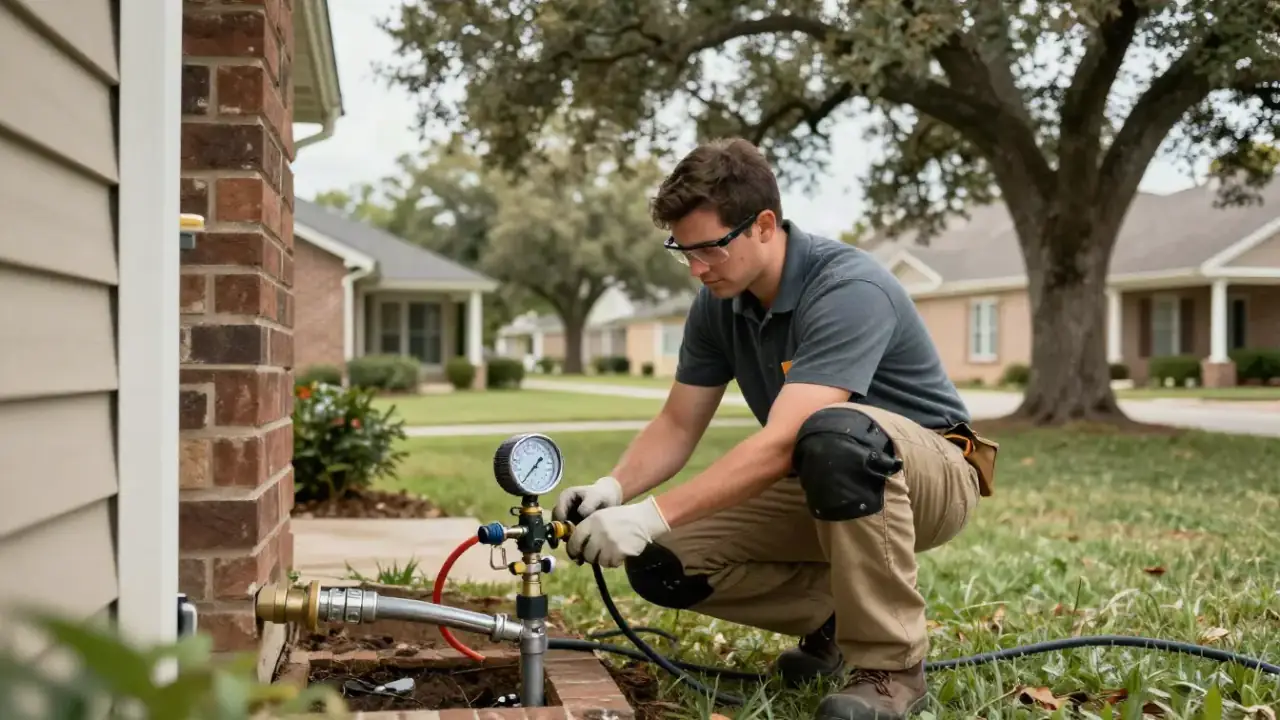
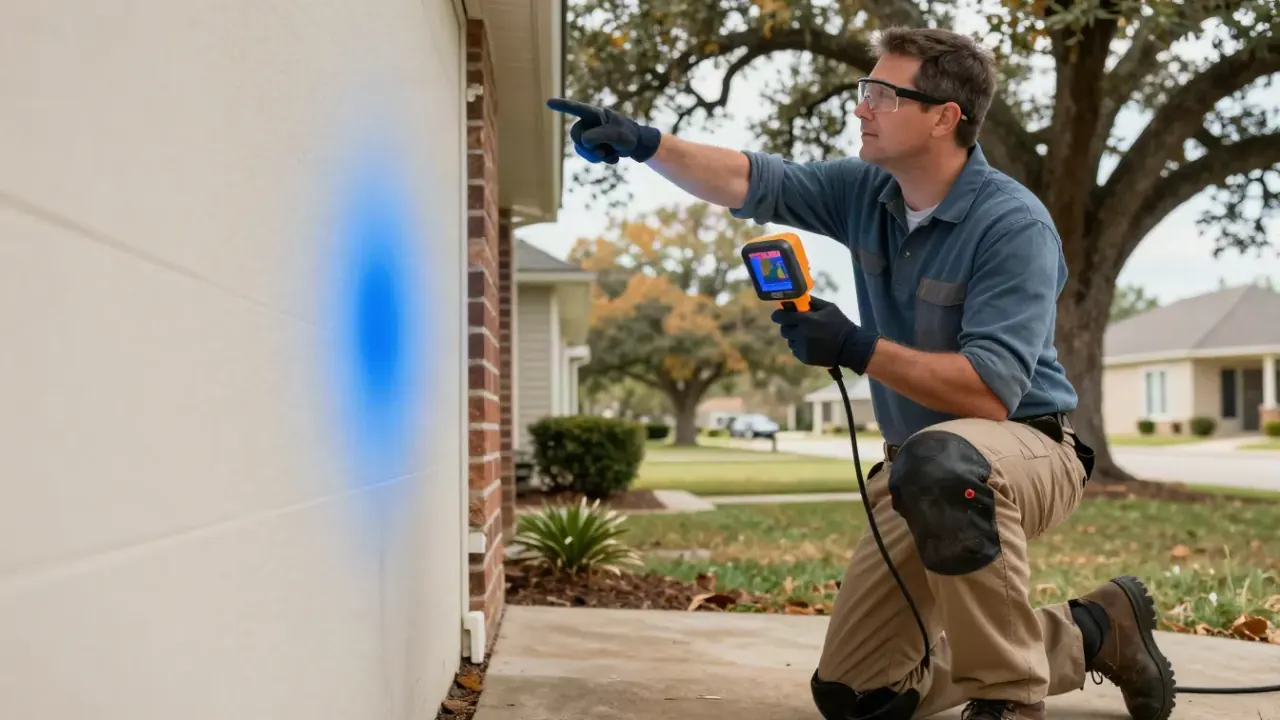
We use pressure testing, electronic acoustic listening, and line isolation to pinpoint the break before we dig. That means we open the deck once, in the right spot, instead of digging three holes and hoping. If the leak turns out to be in the pool shell or fittings, we handle that too through our Pool and Spa Leak Repair Spring TX service.
If the pool is losing water and your household water bill is climbing at the same time, there may be a second leak on the domestic side. We can check that with a Water Meter Leak Diagnosis Spring TX while we are on site. Two problems, one visit.
Frequently Asked Questions
How do I know if my pool is leaking or evaporating in Spring TX?
Run the bucket test for 24 hours with the pump off. If the pool drops more than the bucket, it is leaking. Normal evaporation in Spring is 0.25 to 0.5 inches per day in summer and 0.1 to 0.2 inches in winter.
How much water should my pool lose per day in Spring, Texas?
A pool in Spring should lose 0.25 to 0.5 inches per day to evaporation during swim season and 0.1 to 0.2 inches per day in winter. More than 0.5 inches per day, or any steady overnight loss, indicates a leak.
What is the bucket test for pool leaks in Spring TX?
Fill a bucket with pool water, set it on the top step, mark both water levels, turn off the pump, and wait 24 hours. If the pool level drops more than the bucket level, you have a leak. If they match, it is evaporation.
Who can find a pool leak in Spring TX?
A licensed leak detection company with pressure testing and acoustic equipment. Spring Leak Detection finds and repairs pool leaks across Spring, The Woodlands, and surrounding areas. Call (281) 248-8538 to schedule an inspection.
Can a pool leak fix itself?
No. Pool leaks only get worse. A small crack or loose fitting will widen as water erodes the surrounding soil, and the repair cost grows with it. Fixing a leak early is always cheaper than fixing the damage it causes.
Get Help With Leak Detection in Spring
If your pool is losing more than half an inch a day, stop guessing and get it tested. We find the leak, fix it, and verify the repair before we leave, so you are not topping off the pool next week.
Call Spring Leak Detection at (281) 248-8538 to schedule your pool leak inspection in Spring, Texas.