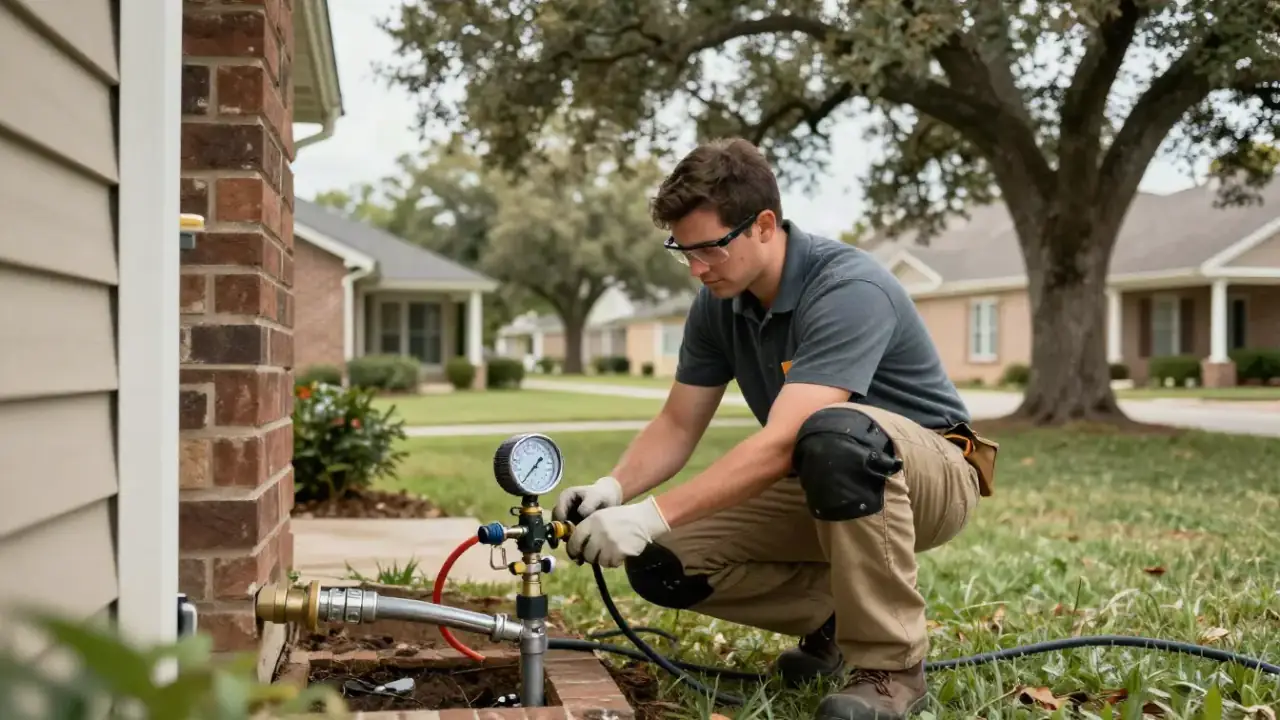
Clay Soil and Foundation Shifts: How They Break Pipes in Texas
The black clay under most Spring, Texas homes swells and shrinks with every wet and dry spell, and that movement is what snaps buried pipes.
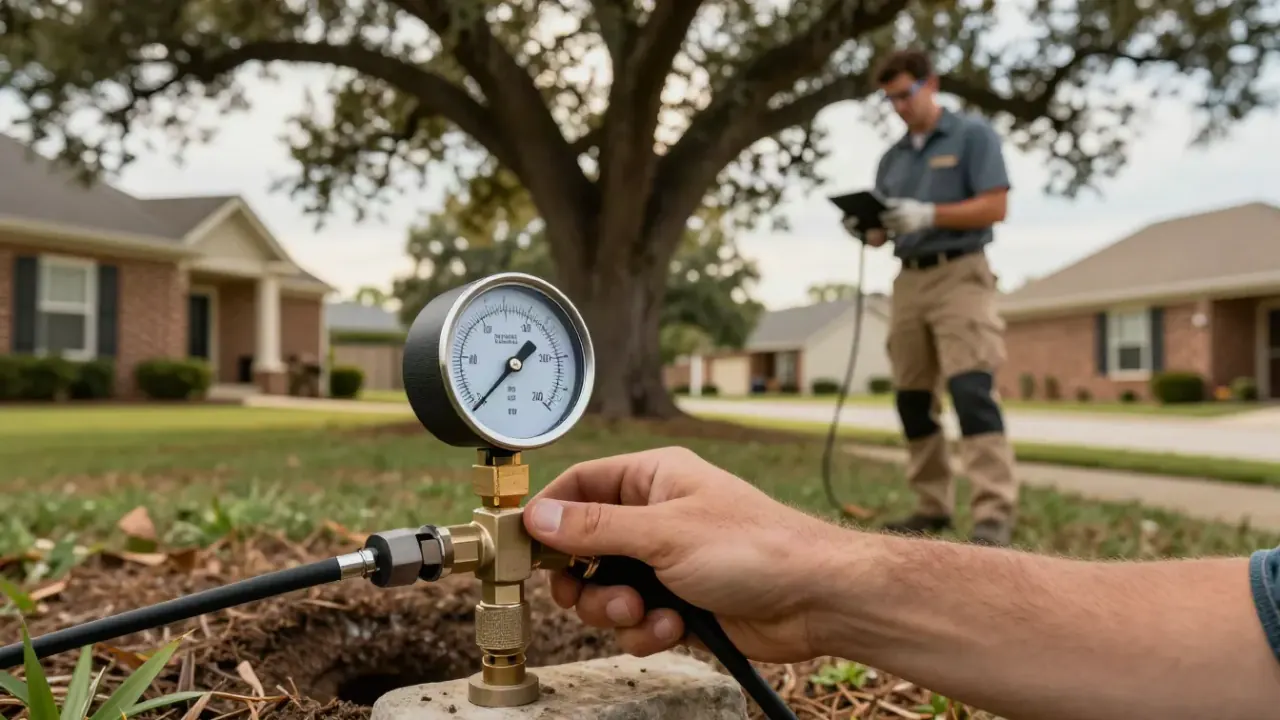
Clay soil foundation shifts break pipes in Spring TX because the black clay under most local homes expands when it soaks up rain and shrinks hard when it dries out, and that cycle drags the slab and the pipes running through it in opposite directions. The pipe loses. A 2024 study out of Texas A&M put vertical movement in untreated Houston-area clay at 1 to 4 inches per year, and a PVC drain line only tolerates about half an inch of shear before it cracks at a joint. That is the whole story in two sentences.
What follows is how the cycle actually works, the signs that show up first in a Spring home, what a repair costs in 2026, and the watering habits that keep your slab and your plumbing on speaking terms.
Why Clay Soil in Spring, Texas Moves So Much
The soil across Spring, Texas is dominated by expansive clay - the same dark Houston Black series that runs from here down to the coast - and expansive clay soil in Spring TX behaves less like dirt and more like a sponge with a memory. When it is wet it can swell 30% or more in volume. When it dries it shrinks back and pulls away from the foundation, leaving a visible gap you can slide a finger into along the slab edge.
Two things make our version worse than most. First, we swing between 60-inch flood years and 30-inch drought years, so the soil never settles into a stable moisture band. Second, most Spring subdivisions were built on graded pads where the original topsoil was scraped off and the clay underneath was compacted - which removed the natural drainage the soil had before construction.
You can see the result on almost any street in Gleannloch Farms Leak Detection or Augusta Pines Leak Detection: hairline cracks in brick veneer, doors that stick in August and swing free in February, and driveway slabs that have lifted a half inch at one corner. Those are cosmetic. The pipes underneath are not.
How Clay Soil Foundation Shifts Break Pipes in Spring TX
Clay soil pipe damage in Spring almost always starts at a joint, a fitting, or a transition between two different pipe materials, because those are the points where the pipe has the least give. A slab that rises on one side and drops on the other puts the pipe in shear, and shear is what plumbing codes are written to avoid.
Here is the sequence we see over and over:
- Differential movement. One corner of the slab lifts 1 to 2 inches while the opposite corner drops. The soil under the middle stays put.
- Stress concentrates at the joint. A 2-inch PVC drain line or a 3/4-inch copper supply line has almost no flex. The joint takes the load.
- The joint cracks or pulls apart. On copper, you get a pinhole or a split. On PVC, you get a hairline crack at the hub or a separated coupling.
- Water starts moving through the soil. A supply leak erodes the clay under the slab, which makes the movement worse. A drain leak saturates the soil, which makes it swell, which makes the movement worse. Either way, the leak feeds the problem that caused it.
That feedback loop is why a small foundation shift pipe leak in Spring, Texas rarely stays small. A pinhole copper leak that starts at a quarter-gallon per hour can be running 20 gallons per hour within a year as the slab keeps moving.
We also see a second, quieter failure mode on the water service line coming in from the meter. The line enters the house through the slab, and that penetration is a fixed point. When the slab moves, the service line does not - so the stress lands right at the wall of the house. That is one of the most common calls we run, and it is why Water Service Line Repair Spring TX is a regular part of our week.
Warning Signs You Have a Foundation Shift Pipe Leak
Warning signs of a foundation movement pipe leak in Spring show up in the yard, on the meter, and inside the house, usually in that order. The yard tells you first because the soil is the thing moving.
- A wet or unusually green patch in the lawn that does not dry out after the sprinklers have been off for a week.
- The water meter spinning with every fixture in the house shut off. That is the single most reliable test you can run yourself.
- A water bill that jumps 20% or more month over month with no change in how many people are living there.
- Warm spots on the floor - that is a hot-water line leaking under the slab.
- New cracks in drywall that appear at a 45-degree angle near a door or window corner.
- Doors and windows that suddenly stick in one part of the house and not another.
- A sound of running water at night when the house is quiet and nothing is on.
If you are seeing two or more of those, the odds are good you have an active leak under the slab. A Water Meter Leak Diagnosis Spring TX takes about 45 minutes and tells you whether the loss is on the supply side, the drain side, or the irrigation side before anyone cuts concrete.
What to Watch Out For
The most expensive mistake Spring homeowners make with clay soil plumbing problems in Spring TX is treating the symptom and ignoring the cause. Here is what we tell people to avoid.
Do not patch the pipe and skip the soil. If we repair a cracked drain line and you go back to watering the same way you always have, the slab keeps moving and the repair fails. We have re-dug the same trench on homes where nothing about the watering changed.
Do not assume a high water bill is the water company's error. It happens, but it is rare. Nine times out of ten the meter is right and the leak is real.
Do not pour a new patio or driveway slab against the house without a proper expansion joint. That slab will push against the foundation every time it heats up, and the pipe running under it takes the hit.
Do not ignore a small crack in the slab. A hairline crack that is 1/16 inch wide in October can be a quarter inch by the following August. Water follows the crack, and the crack widens.
Do not let a landscaper plant a tree within 10 feet of the foundation. Roots chase the moisture from a leaking pipe, and a live oak root can travel 30 feet or more looking for it.
How Do I Protect My Pipes From Clay Soil in Spring TX?
You protect pipes from clay soil in Spring TX by keeping the moisture content of the soil around your foundation as steady as you can, all year, and by catching leaks before they erode the soil under the slab. The goal is not to keep the clay wet. The goal is to keep it from swinging between bone dry and soaked.
What actually works:
- Water the foundation, not the grass. Run a soaker hose 12 to 18 inches out from the slab, 20 to 30 minutes, two or three times a week during dry spells. Not a sprinkler head pointed at the house.
- Keep gutters clean and downspouts extended. Water dumped at the base of the foundation is the fastest way to create a wet spot on one side of the slab.
- Fix the grade. Soil should slope away from the house at roughly 6 inches of fall over the first 10 feet.
- Watch the meter once a month. Read it at the same time of day with nothing running. If it moves, you have a leak.
- Check the irrigation system each spring. A broken sprinkler head near the foundation can dump hundreds of gallons a week into one spot. That is a job for Irrigation and Sprinkler Leak Repair Spring TX.
Homeowners in the older, tree-heavy neighborhoods - the ones we serve with Leak Detection in Old Town Spring - have an extra variable, because mature root systems pull moisture out of the soil faster than new construction lots do. Those homes need the soaker hose running more often, not less.
When to Call a Professional
Call a professional when the meter test is positive, when you have two or more of the warning signs above, or when your water bill has climbed more than 20% without an explanation. Those three situations are not DIY territory.
We use acoustic listening equipment, thermal imaging, and pressure isolation to pinpoint the leak before anyone cuts a slab. That matters because a blind slab cut can cost you $1,500 to $3,000 in concrete work on top of the actual repair. Our team finds the leak, repairs the line, and pressure-tests it before we leave the driveway.
If you are on a slab, on a crawl space, or on a service line that runs 60 feet from the meter, we handle all three. The point of a proper diagnosis is to know exactly what you are fixing before the first shovel hits the ground.
Frequently Asked Questions
How does clay soil break pipes in Spring TX?
Clay soil swells when wet and shrinks when dry, moving the slab 1 to 4 inches a year. That movement puts buried pipes in shear, and the joints - where PVC and copper have the least flex - crack first. A quarter-inch shift is enough to split a 3/4-inch copper line.
Can foundation shifts cause plumbing leaks in Spring, Texas?
Yes, and they are one of the most common causes we see. Differential movement of 1 inch or more across a slab will crack drain lines and supply lines at the joints. If your home has visible foundation cracks and a rising water bill, the two are usually connected.
What is expansive clay soil in Spring TX?
Expansive clay is soil with a high montmorillonite content that changes volume dramatically with moisture. Spring sits on Houston Black clay, which can swell 30% or more when saturated. That is why local foundations move more than foundations in sandy or rocky parts of Texas.
How do I protect my pipes from clay soil in Spring TX?
Maintain steady soil moisture with a soaker hose 12 to 18 inches from the slab, keep gutters and downspouts clear, fix the grade so water drains away, and read your water meter monthly. Catching a leak early is the single biggest factor in avoiding a slab repair.
How much does a slab leak repair cost in Spring in 2026?
Typical 2026 pricing in this area runs $600 to $1,800 for the leak repair itself, plus $500 to $2,500 for concrete cutting and patching if the leak is under the slab. Detection alone is usually $250 to $450 and is often credited toward the repair.
Get Help With Leak Detection in Spring
If your meter is spinning, your bill is climbing, or you have a wet spot in the yard that will not dry out, we can find the leak and tell you exactly what it will take to fix it. We are a local, state-licensed plumbing contractor serving Spring and the surrounding neighborhoods, and we handle everything from Slab Leak Repair Spring TX to Leak Detection Spring TX for homes and businesses across the area.
Call (281) 248-8538 to schedule a leak inspection. We will pinpoint the problem, give you a straight price, and get your plumbing back to dry.